20/10/2026 13:34
Which Repair Guide Comes First? Telegram Pinned Stories for Cambodian Umbrella Shops
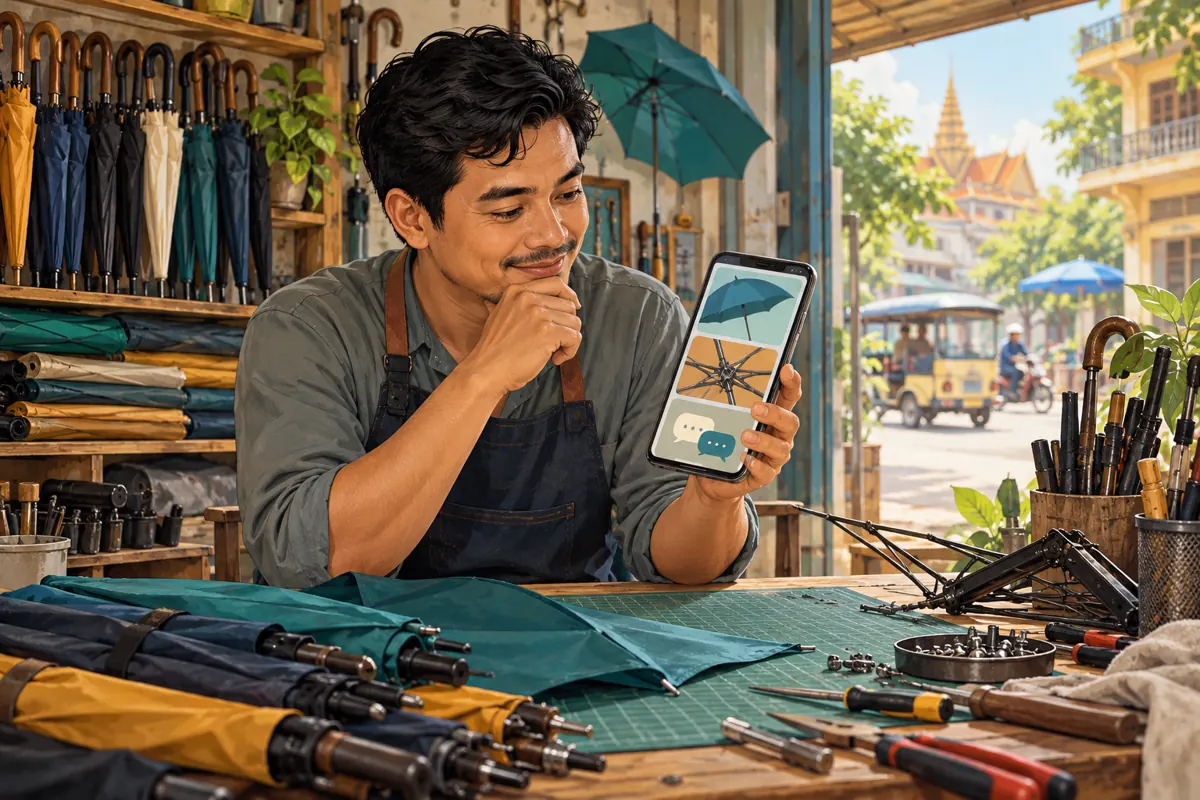
A customer opens an umbrella repair shop’s Telegram profile after seeing a demonstration. The latest stories show new fabric, a busy workbench and a finished repair. None explains whether the shop accepts the customer’s umbrella or which photographs to send. The visitor must start by asking basic questions. For a Cambodian business promoting repair services, choosing which stories appear first can make that first conversation easier. This workflow uses three pinned stories as a compact enquiry guide: what the shop handles, what the customer should photograph, and how to request an assessment. It also explains where SMM service information belongs without treating purchased views as customer demand.
1. Give the top of the profile a practical job
Telegram’s official My Profile announcement documents the ability to pin up to three stories at the top of a profile page. Use that limited space for information a new visitor needs before contacting the business. A story showing an attractive finished umbrella might deserve a place in the wider collection, while a guide to accepted repair types may deserve a top position.
For a hypothetical Phnom Penh umbrella workshop, the immediate problem is incomplete enquiries. People send a close-up of torn fabric without showing the umbrella’s frame, or ask about a large market umbrella when the workshop handles only handheld models. The pinned selection should address those gaps. Write one internal objective before choosing anything: help a first-time visitor send enough information for an initial assessment. That objective gives staff a reason to keep, replace or remove each candidate story.
2. Select three questions that work independently
Build the selection around three questions: do you handle this type of umbrella, which photographs do you need, and what happens after I contact you? Each story should answer its own question completely. Visitors may open only one item, so avoid a presentation where the final story makes sense only after watching two earlier explanations.
Choose stories using usefulness, accuracy and durability. A useful story removes a recurring uncertainty. An accurate story reflects the workshop’s actual services. A durable story remains helpful after today’s delivery or promotion ends. A temporary discount generally needs more frequent attention than a demonstration of the required photo angles.
Do not fill all three positions simply because they exist. If the business has only two clear, current guides, use those while preparing the third. Three polished but vague advertisements can create more work than one precise instruction.
3. Show accepted items without promising a repair
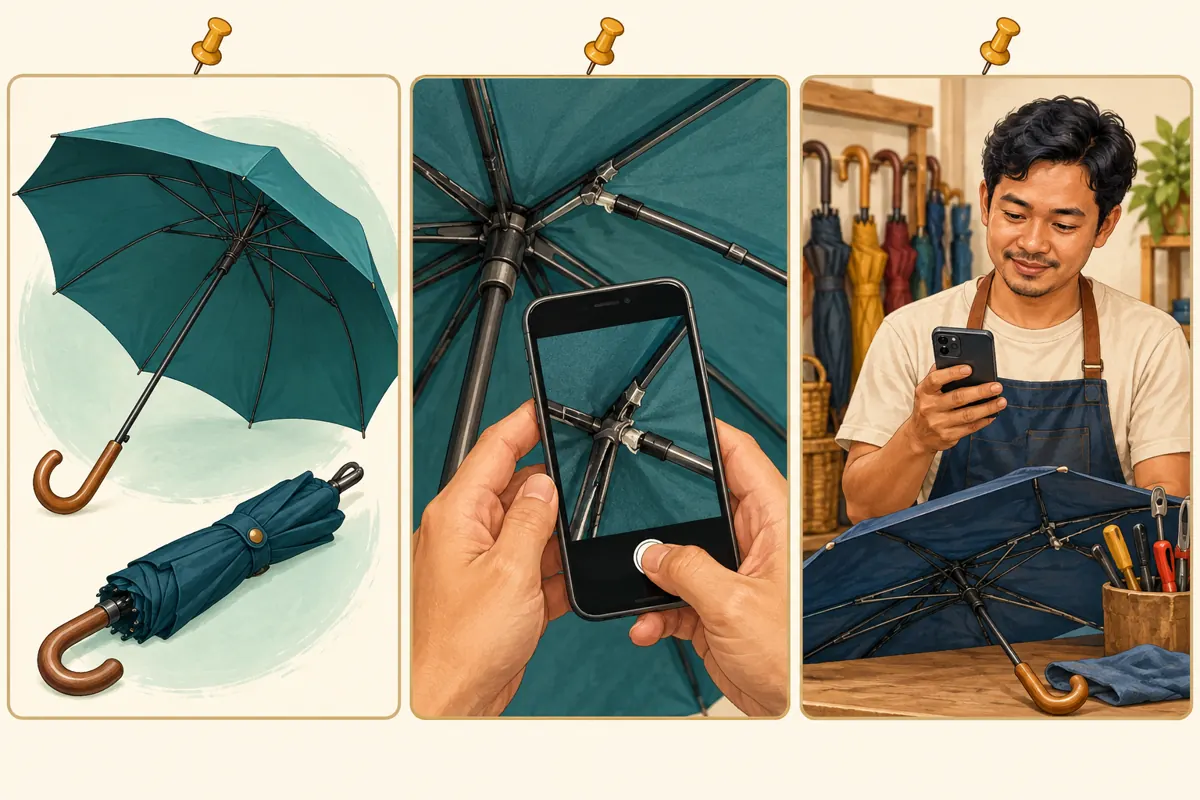
The first story should help customers identify whether their item belongs in the shop’s normal work. Photograph workshop-owned examples against an uncluttered background. Show the complete umbrella, including its handle and overall construction, rather than a decorative crop of the canopy. Explain any meaningful boundary in ordinary language.
In a hypothetical example, the workshop accepts handheld umbrellas for assessment but does not service large outdoor parasols. Its story could say that directly, followed by a request for photographs before travel. Avoid presenting every visible umbrella as repairable. Availability of a matching component and the condition of the frame may still require inspection.
Keep examples representative. A dramatic restoration can be interesting promotional content, but it may give customers unrealistic expectations about routine work. Choose an ordinary item that staff can discuss confidently, and distinguish the services offered from any decision about a particular customer’s umbrella.
4. Demonstrate the photographs staff actually need
The second story should demonstrate a small, purposeful photo set. For this workshop, that might mean the whole umbrella and a closer view of the affected joint, handle or fabric. Show both angles using the same sample so viewers understand how the detail relates to the complete item. Ask only for information staff will use.
Explain the purpose of each image. The full view helps identify the general construction; the close-up helps staff see the reported problem. A simple instruction such as keeping the damaged area in focus is more useful than requesting a high-quality photograph without explaining what must be visible.
Make the request safe and convenient: customers should photograph the item as it is and should not force a damaged mechanism open for the camera. Offer a text description when a useful photograph is difficult. The guide should reduce friction, not make customers feel they must produce a professional inspection report.
5. Make the next conversation predictable
The third story should explain how to request an assessment and what the reply will establish. Identify the business’s intended contact account clearly. Ask the visitor to send the photos privately with a short description of the problem. If travel matters, request a general area first rather than a full home address.
Describe the next step honestly. Staff might review the photographs, ask for another angle, or recommend bringing the item for inspection. Do not imply that sending images confirms a booking, fixes the final price or guarantees that parts are available. Include response expectations only when the team can maintain them.
For Cambodian audiences, prepare the actual customer-facing instructions in the language customers understand, commonly Khmer where appropriate. Have a fluent reviewer check practical terms for the handle, joint and fabric. If English is also useful, keep it concise so the action remains easy to find on a phone.
6. Add the stories to the profile and check the pins
Telegram’s official stories documentation distinguishes stories retained on a profile from stories pinned to its top. Prepare the chosen items, make them available on the business’s intended profile, and use the story management controls to pin the selected guides. Telegram’s official Tips channel identifies My Profile in Settings as a place to manage profile stories and their privacy.
Check the result in the app version the business actually uses; menu labels and placement can vary. Confirm that the intended items appear prominently, then open each one. Do not assume that selecting three stories creates a compulsory viewing sequence. Each needs a recognizable subject and a complete instruction.
Keep a small internal record of the selected topics, their purpose and who maintains them. This is especially useful when another employee posts fresh workshop updates. The record should explain why the enquiry guides deserve priority, rather than merely listing their publication dates.
7. Test access from a customer’s position
A story visible to its owner may not be visible to the intended customer. Telegram documents separate privacy settings for stories kept on a profile. Review each selected guide individually, particularly if it began as a story shared with a restricted audience. Pinning should not be treated as a substitute for checking visibility.
Ask a consenting colleague using a separate account to open the business profile under conditions resembling a new visitor. Check whether the guides are visible, understandable and connected to a usable contact route. Testing only with an employee who is already an included contact can miss an audience restriction.
Give the tester a concrete task: identify whether a folding umbrella is relevant, name the requested photographs, and explain the next step. Record where they hesitate. Fix the instruction or access setting responsible for that hesitation. There is no need to collect unrelated account details or screenshots of private conversations.

8. Keep SMM service decisions separate from the guide
The supplied smm-best.com catalogue includes the exact service name “Telegram - Story Views ~ Premium Account - Max 10k ~ 5k Day ~ INSTANT”. Its description is blank. The title identifies a story-view offering, but it does not provide verified delivery methods, audience geography or evidence that viewers could become local repair customers. Treat the promotional wording as a catalogue label.
Before considering any service request, establish whether its documented target requirements fit the actual story and review applicable platform rules. If the necessary information is unavailable, pause the purchase. Do not infer that a general profile link is an acceptable substitute for a story reference or that a panel service is official Telegram advertising.
Purchased engagement is not evidence of genuine interest, sales, ad delivery or Cambodian users. It also cannot show that customers understood the photo guide. Keep any service record separate from observations about real enquiries, and never present purchased counts as proof that the workshop is trusted or popular.
9. Promote the guide with a specific invitation
Once the guides are accurate and accessible, give people a practical reason to visit them. A workshop demonstration can end with an invitation to check the profile’s pinned photo guide before asking about a repair. The wording should describe what the visitor will find, rather than promising a diagnosis from a picture.
A hypothetical caption could explain that the pinned stories show accepted umbrella types and the photographs needed for an initial enquiry. This connects the promotional content to a useful action. Staff can use the same explanation when someone contacts the business with an unclear image, while still answering the person’s immediate question.
Avoid turning every reply into a demand to watch stories. Some customers will have limited time or difficulty navigating the app. Offer the essential instructions directly when needed. The pinned guide is a reusable aid for communication; staff remain responsible for helping customers complete the conversation.
10. Review confusion, then replace what causes it
Review a manageable set of actual enquiries after the guide has been in use. Look for missing information, repeated misunderstandings and requests the workshop cannot handle. Note whether customers mention using the guide, but do not assume that every complete enquiry came from it. A staff explanation or previous visit may have helped.
In a hypothetical review, customers send whole-umbrella photographs but repeatedly omit the affected joint. The useful response is to improve that visual instruction and its example. Buying additional views would not resolve the missing explanation. If customers confuse inspection with a confirmed repair, revise the next-step story instead.
Common mistakes include pinning an expired offer, keeping conflicting service boundaries, using three nearly identical finished-repair pictures, and leaving maintenance to whoever notices a problem. Assign one person to check the selection when services change. Replace an outdated guide promptly, then repeat the visitor test so the replacement remains usable.

Frequently asked questions
Should the newest story always replace a pinned guide?
No. Replace a guide when another item better serves the visitor’s immediate needs or when its information becomes outdated. A fresh workshop scene may be useful promotional content without answering an essential enquiry question. Review the purpose of the position before changing it.
Can one story cover the entire enquiry process?
Yes, if the instructions remain readable and easy to follow. Start with the shortest complete explanation that works. Split it into separate topics when combining accepted items, photo angles and contact instructions makes the story crowded. Each resulting story should still make sense by itself.
What if the business account does not show the expected controls?
Confirm that you are managing the intended profile and inspect the controls available in your current Telegram app. Consult Telegram’s official guidance rather than assuming eligibility or a particular menu path. Meanwhile, provide the same photo instructions directly in customer conversations so enquiries can continue.
Does a rise in story views show that the guide is successful?
It shows a change in the displayed count, not that customers understood the instructions or requested suitable repairs. Evaluate actual conversations for missing details and confusion. Where purchased engagement exists, record it separately and avoid attributing local demand or business results to the combined count.
Should customer repair photographs become examples in the guide?
Prefer workshop-owned samples. If a customer’s image is particularly useful, obtain clear permission for its intended public use and remove identifying details. Permission to receive an image for an assessment does not automatically mean permission to reuse it for promotion.
Explore the current service catalogue, create an account, or ask a specific question through support tickets.
- Telegram: My Profile, Recommended Channels and 15 More Features
- Telegram: Stories and 10 Years of Telegram
- Telegram API Documentation: Telegram Stories
- Telegram Tips: Story Covers and My Profile Story Management
Prepared with AI assistance. Illustrations explain the workflow and do not represent customer results.