21/10/2026 00:30
Can New Buyers Watch the Demo? TikTok Post Privacy for Cambodian Folding-Divider Shops

A folding room divider is easier to explain when buyers can watch it open, stand and fold away. Yet a useful demonstration can fail at a basic point: the shopkeeper can play it, while the intended customer cannot. Before sharing a TikTok video in a sales conversation or considering a promotional service, check whether the right audience can actually watch the right demonstration. For Cambodian shops, that check should sit beside practical questions about product dimensions, Khmer explanations, collection arrangements and who will answer enquiries. This workflow uses a hypothetical folding-divider shop in Phnom Penh. It separates permission to watch, readiness to promote and evidence of customer interest, so each decision rests on something the shop has checked.
Start with the customer’s task
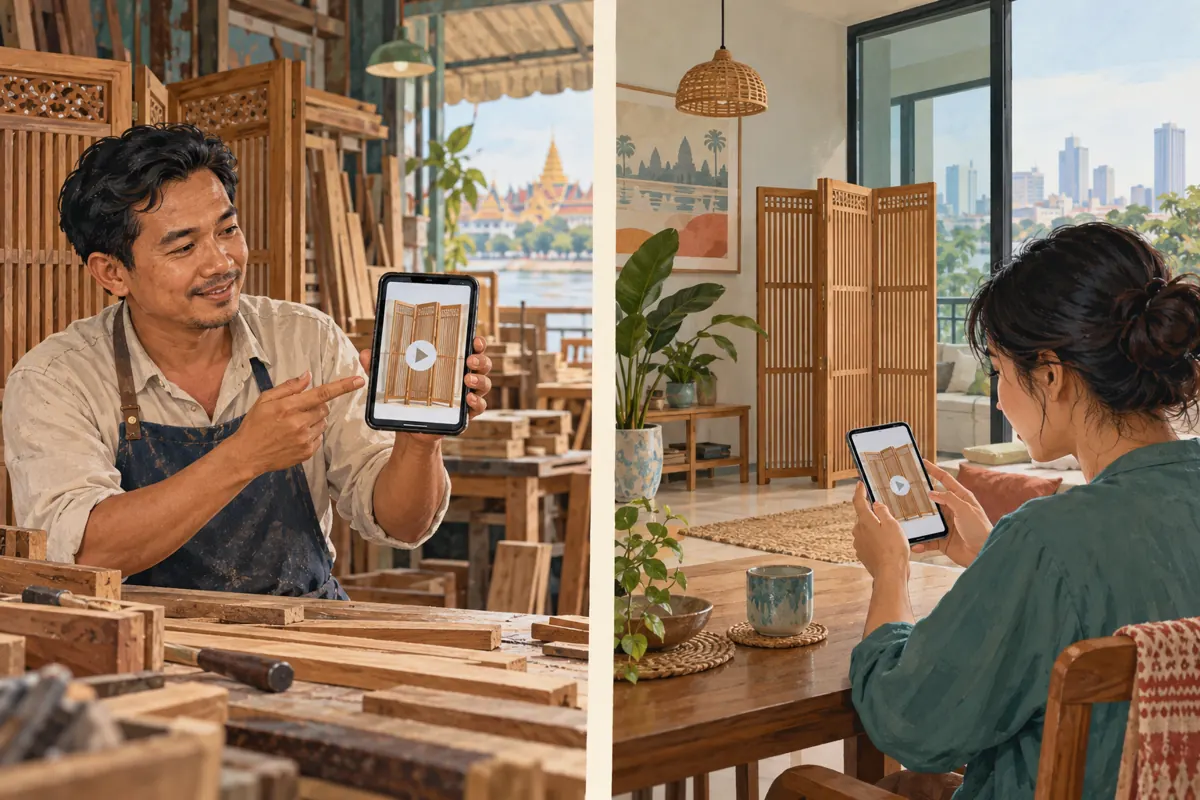
In our hypothetical example, the shop has filmed a wooden screen opening beside a desk. The owner wants prospective buyers to understand how much floor space it occupies. A colleague reviews the clip, and the owner prepares to distribute its link. The immediate objective is specific: a new viewer should be able to watch the demonstration and identify which measurement to request.
Write that objective before choosing an audience or spending money. A clip meant for a customer’s private approval has a different purpose from a public product guide. Decide whether the footage answers a general buying question, contains details of an individual commission, or still needs internal review. These distinctions prevent a temporary review version from becoming the shop’s public reference.
Check the account and the individual post
TikTok documents separate audience settings for individual posts. Public accounts can select Everyone, Friends or Only you; private accounts offer Followers, Friends or Only you. Friends means followers you follow back. For an existing video, open Profile, select the post, tap More options, then Privacy settings and choose its audience. See TikTok’s post privacy guidance: https://support.tiktok.com/en/account-and-privacy/account-privacy-settings/video-visibility.
Use two separate lines in the shop’s review note: account privacy and intended post audience. This makes the decision explicit for whoever prepares promotion. A colleague should not have to infer the intended audience from a familiar profile picture or from the fact that the owner successfully played the clip.
TikTok also explains that public content may travel beyond the app, while a private account limits access to approved followers. Review that wider exposure before changing the account itself: https://support.tiktok.com/en/account-and-privacy/account-privacy-settings/making-your-account-public-or-private. Treat an account-wide change as a decision about the shop’s whole presence.
Prepare a demonstration suitable for strangers
Watch the proposed public version without relying on your knowledge of the stock. Does it show the same divider from beginning to end? Can viewers distinguish its opened arrangement from its folded storage position? Does the explanation identify whether a measurement describes one panel, the overall product or the space occupied in the demonstrated arrangement?
For Cambodian buyers, use the language your intended customers understand and make measurement units explicit. A Khmer explanation can accompany clear close-ups without filling the screen with writing. State confirmed collection or delivery arrangements separately from the product demonstration. Avoid leaving a temporary transport quote in footage that may remain useful after the quote expires.
Inspect the background as carefully as the product. Move customer order sheets, address labels and unrelated pricing notes out of the frame. If the demonstration was filmed in somebody’s home, obtain appropriate permission and remove details that the product lesson does not require. A clean shop-floor reshoot may be simpler than trying to explain away distracting private information.
Give unfinished footage a clear review process
Before release, assign one person to approve product facts and another, where possible, to check whether the explanation makes sense. These can be two tasks performed at different times by a small team. Ask focused questions: is the demonstrated model identified correctly, is the folding motion visible, and does the spoken explanation match what appears on screen?
For confidential review, use an agreed private file-sharing method or review the source video together. Do not treat a social audience category as a custom list of employees. Keep a short approval note tied to the actual video version. A useful hypothetical note would say that the shop owner approved the product identification, while the editor must replace the final shot because it shows a different finish.
Test from outside the owner’s account
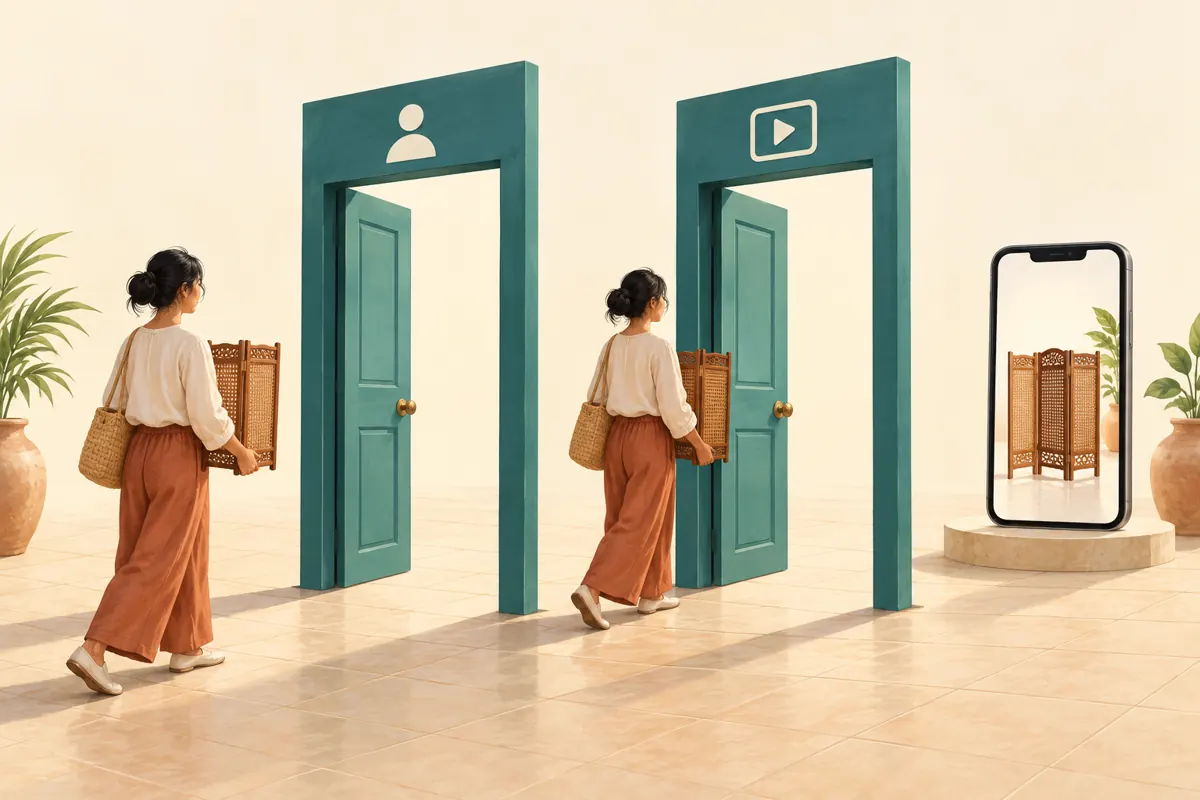
Once public release is appropriate, ask a trusted colleague who is not using the shop’s login to open the exact post link. Ideally, this person should resemble the intended new viewer rather than someone already closely connected to the account. They should use their own account and device; there is no reason to exchange passwords.
Give the tester a small task: confirm the creator, play the demonstration and describe what the viewer is asked to do next. Record whether they reached the correct video, encountered a sign-in prompt or saw an unavailable-content message. Preserve the actual observation rather than translating every failure into a privacy diagnosis.
Repeat a failed check through another ordinary viewing route if practical, such as opening the link in the app instead of a browser. This is troubleshooting, not proof that every buyer will have the same experience. A successful check establishes one observed path to the content. It does not establish universal availability, recommendation placement or Cambodian audience delivery.
Choose a response to the test result
If the correct demonstration plays and the information is approved, proceed with the planned customer-facing distribution. If the wrong video opens, replace the reference in the working brief and test again. If the intended viewer cannot watch, pause distribution while checking the audience selection and any notices visible to the account owner.
If the content itself is unsuitable for public release, fix that problem before broadening access. A buyer’s home address or an unapproved commission is not a reason to hurry through the visibility check. Prepare a general demonstration that serves the same buying question without exposing the private material.
When the cause remains unclear, record the link, time, viewing route and exact message for further investigation. Do not repeatedly change several settings at once. Changing one relevant condition and retesting makes the result easier to interpret and reduces confusion for the next person handling the task.
Make the SMM-panel decision separately
The supplied smm-best.com catalogue includes the exact title “TikTok Video Views ~ Max Unlimited ~ 100M/Days ~ Instant ~ 𝐍𝐎 𝗥𝗘𝗙𝗜𝗟𝗟”. It is listed in a TikTok views category, but no supporting description was supplied. The title alone does not verify a delivery method, timing, capacity, audience location or commercial outcome. Treat its wording as a catalogue label, not established performance evidence.
TikTok states that it does not allow fake engagement, including services that artificially increase engagement. Its official explanation is available at https://newsroom.tiktok.com/how-tiktok-counters-deceptive-behaviour?lang=en-150. Before considering any service, establish what it actually does and whether that method complies with the platform’s rules. If that cannot be established, do not proceed.
A successful visibility check does not resolve that policy question. Purchased engagement is not evidence of genuine interest, sales, ad delivery or Cambodian users. For this shop, improving the demonstration, distributing it through relevant permission-based conversations and assessing available official advertising options are separate promotional decisions. No catalogue title establishes an official relationship with TikTok.
Record the release and interpret results carefully
Keep a compact release note containing the post reference, product version, approved audience, review date and independent playback result. Add the person responsible for checking future product changes. This record helps when a colleague later asks which demonstration accompanied an enquiry or whether an older link is still suitable to share.
TikTok says changing privacy does not reset accumulated views. Record a dated baseline if you need to distinguish earlier activity from a later review period; the existing total is not a fresh launch counter. The platform’s explanation appears in the post privacy guidance cited above.
Keep business outcomes in their own record. For this hypothetical shop, useful observations might include questions about folded depth, requests to compare finishes or appointments to inspect the screen. Ask enquirers which demonstration they mean when that context is unclear. Describe the evidence narrowly: a fitting question is a fitting question, not a confirmed order or proof that a promotional service caused it.
Avoid fixes that hide the real problem
One common mistake is treating a colleague’s successful playback as a complete audience test. Another is changing the entire account because one post seems inaccessible. A third is broadening access before checking whether the video contains customer information. Each mistake skips a different decision: who tested, which control matters and whether the content belongs in public.
Avoid deleting and uploading the demonstration again simply because someone reports difficulty watching. First establish whether the issue involves the reference, audience, viewing route or a platform notice. Creating another post can leave staff distributing different versions and make later enquiries harder to trace.
Finally, do not change privacy repeatedly in pursuit of a hoped-for visibility boost. Use audience controls to express who should be allowed to watch. Use content improvements to make the demonstration more helpful. Keep promotion decisions accountable to their actual method and purpose, rather than using a larger activity count to declare that the access problem has been solved.
Frequently asked questions
Should we make a customer’s custom-divider video public to help them watch it?
First establish whether the customer approved public use. A private commission may reveal a room layout, personal belongings or design details that do not belong in general promotion. Send the approved file through an appropriate private channel when needed, and film a separate general demonstration for prospective buyers.
What if the tester can watch but cannot explain the product?
The access check passed, but the demonstration still needs work. Ask which detail was unclear, then revise the relevant shot or explanation. For a folding divider, show the opened arrangement and folded storage position distinctly. Repeat the comprehension check before relying on the clip in customer conversations.
Does a visible video mean an SMM views service is suitable?
No. Visibility only answers an access question. You still need reliable information about the service’s method, compatibility with platform rules and relevance to the business objective. The supplied catalogue description is empty, so its title cannot establish those facts. Do not use purchased activity as proof of customer demand.
When should the shop check the demonstration again?
Review it when the featured model, available finish, fulfilment arrangements or linked customer instructions change. Also recheck after an audience-setting change or a credible access complaint. Assigning a named reviewer makes this practical without requiring staff to repeat the entire process every time they share the link.
Explore the current service catalogue, create an account, or ask a specific question through support tickets.
- TikTok Help Center: Post privacy settings
- TikTok Help Center: Choosing between a private or public account
- TikTok Newsroom: How TikTok counters deceptive behaviour
Prepared with AI assistance. Illustrations explain the workflow and do not represent customer results.