22/10/2026 19:37
Can Buyers Open the Crate Details? Telegram Post-to-Story Sharing for Cambodian Shops
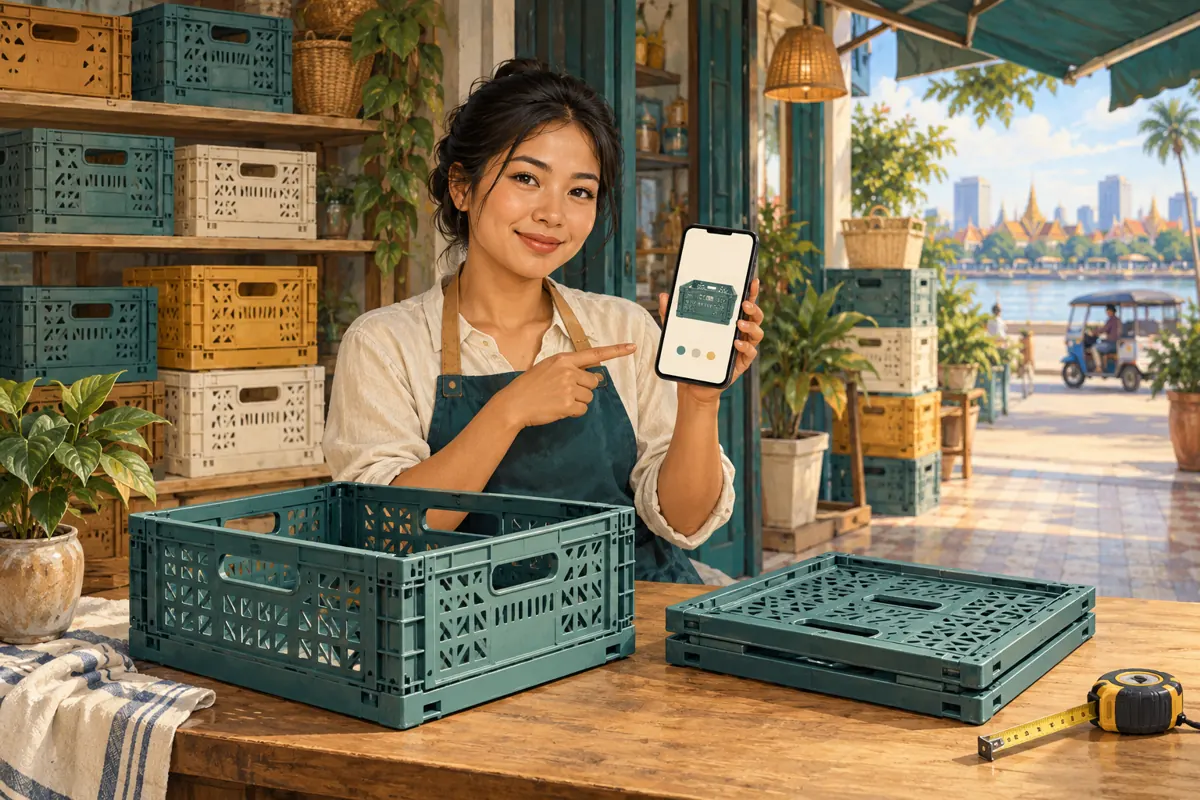
A folding crate can look useful in a Telegram Story while leaving the buyer’s main question unanswered: will it fit their goods, shelf or storage space? For Cambodian shops promoting these products, the useful next step is a clear route from the preview to a detailed product post. Telegram’s channel-message repost feature can support that route. This guide explains how to prepare the source post, build a focused Story, test what a visitor encounters and handle the resulting questions. It also shows where an SMM panel service needs separate scrutiny: purchased views cannot establish that anyone checked the dimensions, lives in Cambodia or intends to buy.
1. Choose the buying question before choosing the picture
Start with one question that the Story should help a visitor resolve. For folding crates, common questions include whether the usable interior fits a particular package, whether the folded crate fits beneath a counter, and whether the open crate fits a shelf. These are different decisions. A single attractive photograph rarely explains all three, especially when the viewer has no familiar object for scale.
Consider a hypothetical Phnom Penh packaging shop serving small market sellers. Its staff repeatedly receive questions about storing empty crates between trading days. The next Story could therefore focus on folded storage space, with the source post explaining both open and folded dimensions. The purpose is specific: help a reader identify the relevant model and send a useful sizing question. Avoid making the Story a general catalogue with several unrelated products competing for attention.
2. Make the channel post useful on its own
Prepare the destination before creating the preview. Give the crate a stable model reference and show the actual item in its open and folded states. Include verified dimensions, what is included in the sale, and a clear way to ask about availability. If a lid is pictured but sold separately, explain that beside the product description. A visitor should not need to search earlier messages to discover what the photograph represents.
For Cambodian enquiries, distinguish pickup arrangements from delivery discussions. A shop can state its confirmed pickup location while asking buyers elsewhere to provide their destination for a separate delivery quotation. Do not imply that a product price includes transport unless it does. If stock changes frequently, explain that availability needs confirmation rather than making an undated promise that the model is always ready to collect.
3. Separate interior capacity from exterior fit
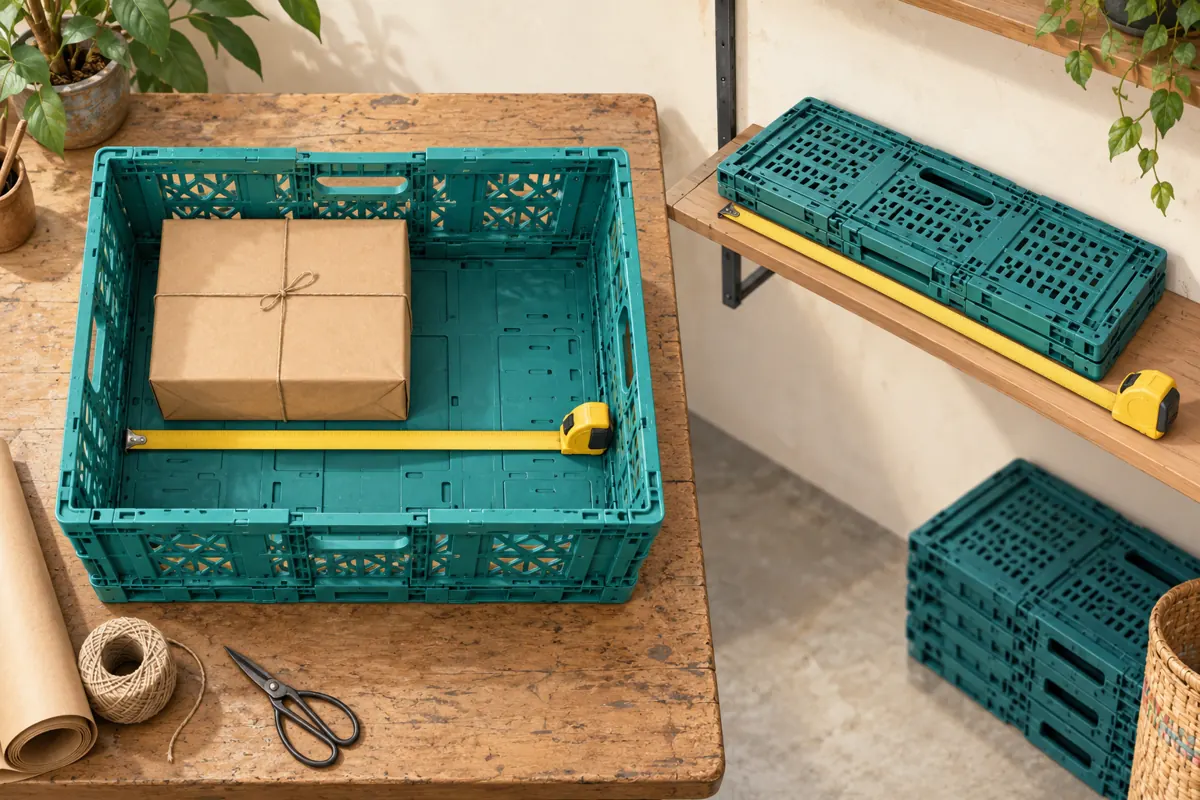
A product post should identify what each measurement describes. Interior dimensions help buyers assess usable space; exterior dimensions help them assess shelf or counter fit. Folded dimensions answer another question entirely. State the unit alongside the dimensions and keep the order consistent. Photograph the measurement points when a rim, tapered wall or projecting handle could make the figures ambiguous.
In a hypothetical enquiry, a seller wants to place a particular carton inside a crate. Giving only the crate’s outside width would not resolve the question. Ask for the carton’s dimensions, then compare them with verified usable interior measurements. Allow for handling space rather than promising a fit based on a photograph. Likewise, do not turn a picture of stacked crates into a load-capacity claim. Any such specification needs reliable product information for that exact model.
4. Repost the message with its route back to the channel
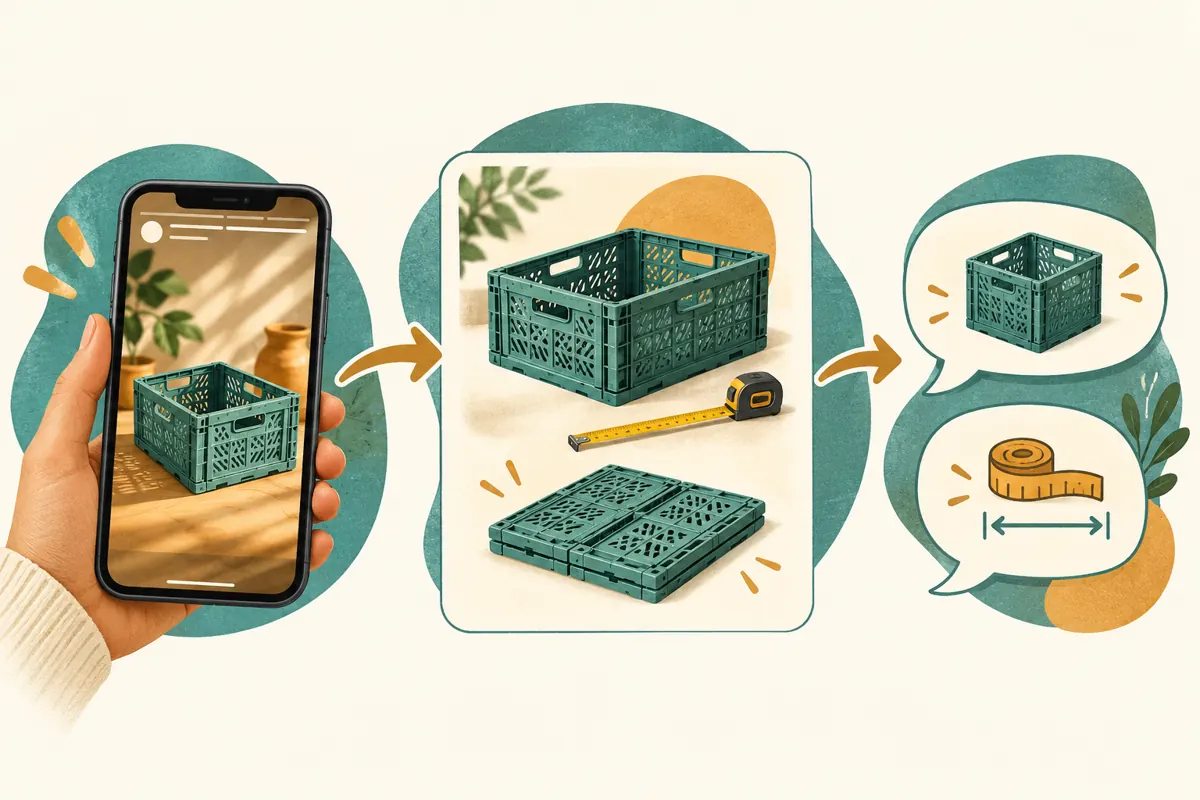
Telegram’s official feature announcement explains that channel messages can be reposted into Stories. The resulting message card can be moved and resized, and viewers can tap it to open the message in its channel. The documented starting point is the message’s Share Arrow, followed by Repost to Story. This gives the preview a direct connection to its source.
Use that route when the selected message contains the details you want readers to consult. A screenshot alone does not preserve the same built-in connection. Before designing the Story, confirm that the option is available for the intended message and publishing account. If it is unavailable, pause and check the account’s available sharing controls. Do not assume every account, channel or protected message supports the same workflow, and do not bypass another owner’s sharing restrictions.
5. Add one reason to open the details
The Story needs enough context to explain why the product card matters. For the hypothetical packaging shop, an appropriate prompt would be: “Short on storage space? Open the post to compare the crate’s open and folded sizes.” This sets an honest expectation. It does not imply a discount, limited stock or a performance advantage that the source post cannot substantiate.
Keep the card large enough to recognise and leave its important content unobstructed. Avoid covering the crate or model reference with decorative stickers. Prepare the customer-facing wording in the language the intended readers understand; Khmer copy can be checked by a fluent team member without changing the website’s language configuration. If English model codes appear on packaging, preserve those codes consistently so a buyer can refer to the same item when asking a question.
6. Test the whole journey from another phone
Ask a colleague using an ordinary viewer account to open the Story and follow the product card. The test should answer concrete questions: is the correct product recognisable, does the intended message open, are the measurements readable, and can the viewer find the enquiry instructions? Test the actual published result before extending promotion. A preview inside the editing screen cannot establish what another account will encounter.
Telegram distinguishes public channels, which people can find and join, from private channels that require access through an invitation or an owner. Choose a destination whose access arrangement fits the campaign. If a tester encounters an unexpected access barrier, resolve it before sending more people there. Also ask the tester to describe the offer in their own words. Confusion about whether a lid is included is an editorial problem even when every tap works correctly.
7. Give staff a short sizing-enquiry routine
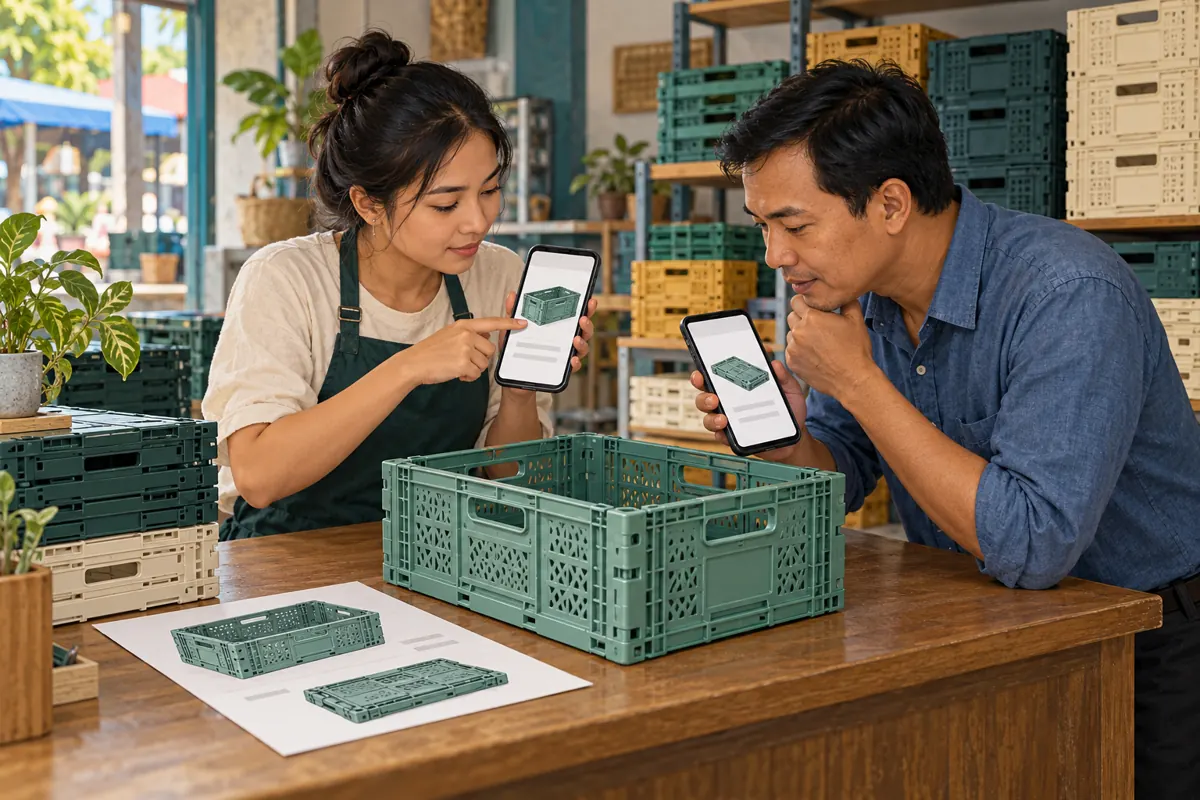
A useful Story can still create inefficient conversations if staff must reconstruct the product context. Put a simple request in the source post: send the model reference, intended use and relevant measurements. For a shelf-fit enquiry, ask about available shelf space. For a packing enquiry, ask about the object going inside. Request only the information needed to answer the question rather than presenting every buyer with a long form.
In a hypothetical exchange, a customer sends a photograph of a shelf without measurements. The assistant should explain which dimensions are needed and why the photograph is insufficient. Once suitability has been discussed, confirm stock, quantity and collection or delivery arrangements separately. Keep a sizing discussion distinct from a reservation. A message saying that a crate appears suitable should not silently become a promise to hold stock or dispatch an order.
8. Evaluate an SMM service independently of the content
The supplied catalogue includes the exact public service name “Telegram - Story Views ~ Premium Account - Max 10k ~ 5k Day ~ INSTANT”. Its title refers to Story views, but the supplied description is empty. The title alone does not verify its account-quality wording, delivery claims, eligibility requirements or supported target format. Obtain the current written specification before considering a request.
The channel message and the Story are separate destinations. Do not assume that a service referring to one accepts the other. If the required input is unclear, ask support a narrow question about the supported target; do not submit a guessed link. Purchased engagement is not evidence of genuine interest, sales, ad delivery or Cambodian users, and the service name does not establish an official Telegram affiliation. Skipping a purchase is sensible when its purpose or conditions cannot be established.
9. Record questions separately from exposure
Maintain a small campaign note with the source-post reference, Story publication time, selected product question and any separately documented service activity. Record enquiries according to what people actually ask: interior fit, folded storage, availability or delivery. This makes the review useful even when conversations are few. It also helps staff identify missing information without treating every reaction as a buying signal.
Telegram’s Channels FAQ says channel-post view counts are approximate and include views from forwarded copies. They are not a clean count of distinct prospective customers. Do not subtract one counter from another to calculate supposed Story conversions. If someone voluntarily says they arrived through the Story, record that as a reported source. Otherwise, mark the source unknown. A confirmed order belongs in a separate record supported by the shop’s normal order-confirmation process.
10. Avoid the mistakes that make a good preview misleading
One mistake is reposting an old promotional message because its photograph is better than the current one. The Story then sends readers to obsolete terms. Another is choosing a photograph showing several crate models while linking to details for only one. Review the image, model reference and written offer together. If they do not describe the same item, resolve the mismatch before sharing.
A further mistake is assuming a corrected channel post means every Story element now communicates the correction. Separately inspect the visible card and any wording added around it. Remove or replace a Story that still presents an inaccurate offer. Avoid deleting and rebuilding the source casually while a promotion depends on it; first identify the affected references. If a service request already exists, document the change and clarify its implications without assuming cancellation or retargeting is available.
11. Improve the next Story from the unanswered question
Review the conversations after the promotion has had a reasonable opportunity to generate enquiries. Look for a recurring gap rather than a dramatic conclusion. If readers understand the folded dimensions but keep asking how the sides lock, the next useful asset may be a short demonstration. If they confuse interior and exterior measurements, revise the product reference image before increasing exposure.
Change one major communication element at a time when practical, and note what changed. This is an editorial learning routine, not a controlled experiment proving that a Story caused sales. Keep the verified product information reusable while checking availability and offer terms before each new promotion. The strongest outcome is a clearer route from seeing a crate to understanding it and asking a question that staff can answer accurately.
Frequently asked questions
Should the Story contain every crate specification?
Usually, the Story should identify the product and the question it helps answer. Put the complete verified specifications in the source post. However, any condition needed to prevent a misleading first impression should remain visible in the preview. For example, do not prominently show an optional lid while making the preview appear to advertise an inclusive package.
What should we do if Repost to Story is missing?
Check the sharing options available for that specific message and account, and consult Telegram’s current official guidance. Do not assume the workflow is available simply because another account can use it. Continue with a channel post or another supported sharing method while resolving the limitation. A manually uploaded screenshot should not be described as a functioning message repost.
Can we assume Story viewers are Cambodian customers?
No. A view does not establish location, purchasing intent or even that the viewer read the dimensions. Cambodian relevance comes from the content, language and practical fulfilment information you provide; it cannot be inferred from a counter. Ask for a delivery destination when needed for a quotation rather than guessing it from profile details.
Should we buy more views if nobody asks about the crate?
First test the destination and review the offer. Missing measurements, unclear inclusions or difficult enquiry instructions may explain the silence, but silence alone cannot identify the cause. Purchased views will not diagnose those problems or demonstrate demand. Resolve known gaps, consider whether the content reaches an appropriate audience, and make any spending decision separately.
How should we handle a product that sells out after sharing?
Update the availability information and inspect the Story for wording that still suggests immediate stock. Remove or replace misleading material. If offering an alternative model, provide its own verified details rather than treating similar appearance as equivalent fit. For an existing service request, ask about the applicable options without promising that the request can be stopped or transferred.
Explore the current service catalogue, create an account, or ask a specific question through support tickets.
- Telegram: Channel Appearance, Posts in Stories and More — Share Posts in Stories
- Telegram Channels FAQ — Channel Access and View Counters
Prepared with AI assistance. Illustrations explain the workflow and do not represent customer results.