19/10/2026 08:13
Can Customers Message Your Telegram Channel? An Enquiry Workflow for Cambodian Cake Shops
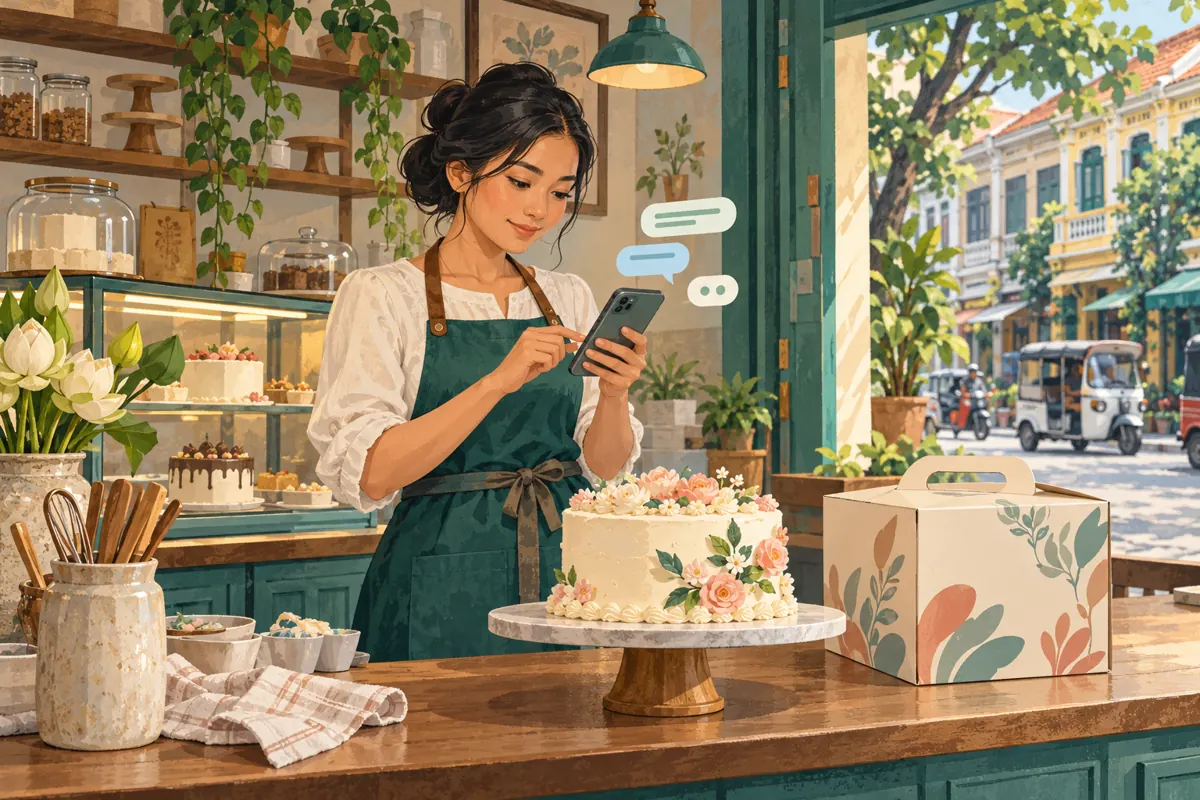
A cake photograph can attract attention while leaving the customer unsure where to ask about a date, size or decoration. For a Cambodian bakery promoting its work through Telegram, that uncertainty creates an avoidable break between browsing and making an enquiry. Channel direct messages offer a way to connect those activities, but switching on the feature is only the beginning. The shop also needs someone to answer, a method for checking capacity and a clear definition of a confirmed booking. This guide builds that workflow and explains where an SMM panel post-view service fits into the decision—and what it cannot establish.
1. Decide what the channel inbox should handle
Start with one purpose: helping someone ask whether the bakery can make a particular cake for a particular occasion. Keep the scope manageable. The inbox might handle availability, size options, decoration questions and collection arrangements. It should not become an undefined promise that every request can be accepted immediately. Before promoting it, decide which questions a counter assistant can answer and which require the baker.
Consider a hypothetical Phnom Penh cake shop that publishes celebration cakes but receives enquiries through several employees’ personal contacts. A customer asks one employee about Saturday availability and sends a design to another. Neither has the complete request. The proposed channel inbox gives the shop a consistent starting point. Its value is organizational: staff can direct customers toward the same enquiry route. It does not create extra production capacity or guarantee that a conversation will become a sale.
2. Enable direct messages and test the customer route
Telegram’s official article, Direct Messages for Channels, Voice Trimming, Topic Tabs and HD Photos, explains that channel owners can enable this feature through Channel Settings > Direct Messages. Customers access it through the message bubble in the channel’s bottom bar. Telegram describes a separate interface for these conversations, apart from the owner’s personal chats, and an optional fee for each direct message.
For ordinary cake enquiries, begin without a messaging fee unless the business has a clear reason to charge and explains it beforehand. This is a practical recommendation, not a Telegram requirement. Asking someone to pay simply to clarify a cake size may introduce unnecessary hesitation. Check the settings actually visible in your app, then have a consenting colleague test the route as a customer. Confirm that they can find the entry point, send a question and receive your reply. Do not announce the inbox until that basic exchange works.
3. Keep shared information public and individual details private
Use the channel post to answer questions that apply to everyone: what the pictured cake represents, which variations are available, whether advance ordering is required and where collection takes place. If a photograph shows a previous custom order, say so. A display image should not imply that an identical cake is waiting for immediate collection. Make the distinction between an example design and current availability explicit.
Move customer-specific discussion into the enquiry conversation. Start with the requested date, approximate size and collection or delivery preference. Ask for an exact address only when it is needed to arrange an available delivery option. There is no need to request a child’s full identity or publish a birthday inscription to establish basic availability. Telegram’s Channels FAQ explains that linked discussion-group comments are a separate feedback mechanism. Do not direct customers to post personal order details in that public discussion.
4. Give viewers a precise first action
A vague instruction such as “Contact us for more” leaves the customer to invent the next step. Instead, explain where to write and what information will help. A hypothetical English-language instruction could read: “Use the channel message button to ask about this design. Tell us your preferred date, approximate cake size and whether you want collection or delivery. We will check availability before confirming.” Adapt the wording into the language your customers actually use.
Place the instruction alongside the product explanation so that a viewer does not have to search through unrelated posts. Avoid requesting every customization detail at once. A long questionnaire can produce incomplete answers and extra work before the shop even knows whether the date is possible. Also distinguish response hours from opening hours: a bakery may serve counter customers while the person handling custom orders is unavailable. State a realistic reply window based on actual staffing.

5. Separate an enquiry, a quotation and a booking
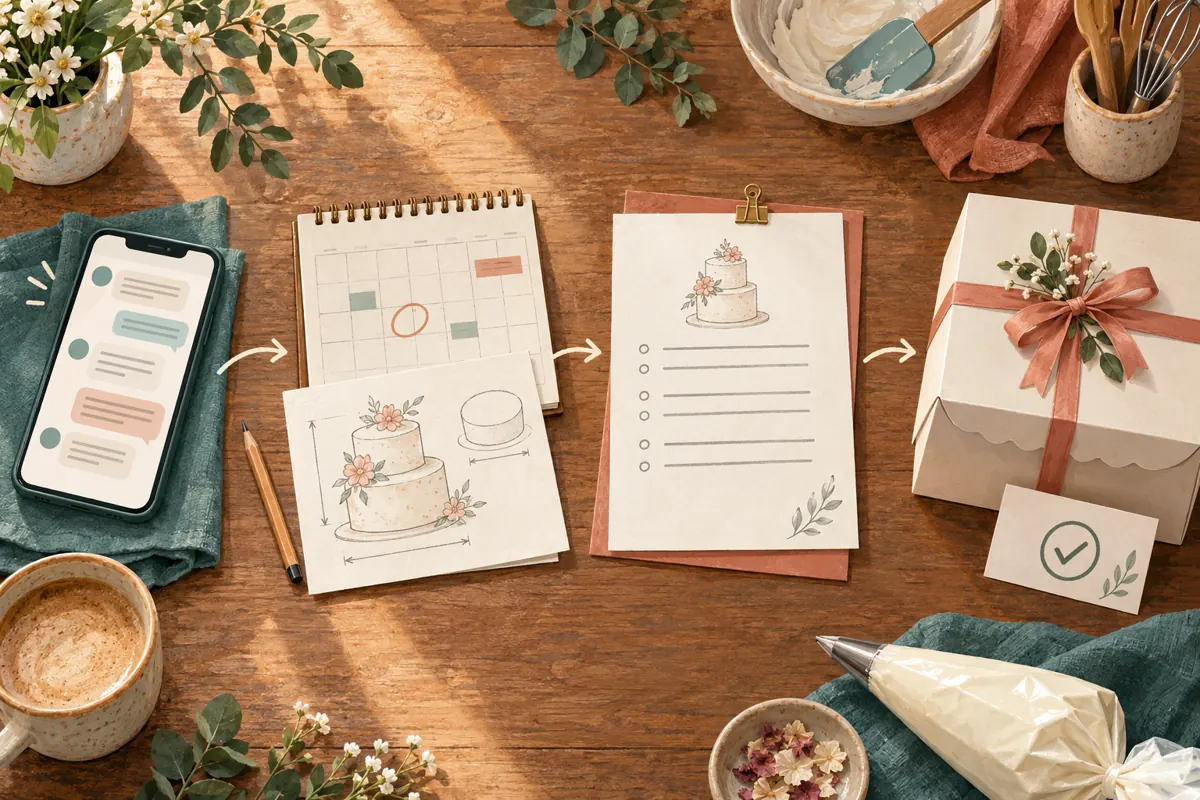
Use three working stages. An enquiry describes what the customer would like. A quotation describes what the shop can offer, including the agreed specification, price and collection or delivery terms. A confirmed booking means the shop’s stated acceptance conditions have been met. These are internal operating definitions, not automatic Telegram statuses. Staff can track them in the shop’s existing order book without adding a complicated system.
In a hypothetical case, a customer asks for a floral cake for Saturday afternoon. The assistant checks the production diary before discussing detailed decoration. The baker confirms which design is feasible, and the assistant sends a quotation with the collection window and any applicable deposit conditions. Only after the required acceptance steps are complete does the shop mark the booking confirmed. A friendly acknowledgement, a read message or a customer saying “looks nice” should never be treated as permission to begin production.
6. Assign the next reply before increasing promotion
Choose one person to own the next response during each working period. If another employee must check ingredients or production space, record that dependency rather than leaving everyone to assume someone else is answering. A short internal note can contain the request reference, current stage, missing decision and next responsible person. Keep unnecessary customer details out of general staff discussions.
Create a simple rule for requests outside the assistant’s authority. An unfamiliar decoration technique goes to the baker; an unavailable collection time goes back to the customer with feasible alternatives. Do not improvise promises just to keep the conversation moving. Before a busy weekend or holiday period, compare the advertised reply window with the team’s actual availability. If the shop cannot reliably handle existing enquiries, improve coverage or narrow the promoted offer before trying to attract more attention. An unattended inbox weakens an otherwise useful promotion.
7. Assess a post-view service against the actual problem
The supplied smm-best.com catalogue includes the exact public service name “Telegram Post Views [Last 1 Post]”. Its title identifies a post-view service, but the brief provides no supporting description. That leaves important operational questions unanswered. Do not infer delivery speed, account quality, Cambodian audience origin or a guarantee that viewers will contact the bakery. Clarify how the current listing identifies the target post before considering any request, particularly if another post may be published.
Use a problem-first decision. If customers cannot find the message button, improve the instructions. If replies arrive late, fix staffing. If requests are unsuitable, clarify the offer. A purchased view count does not resolve those issues. Purchased engagement is not evidence of genuine interest, sales, ad delivery or Cambodian users. This workflow requires no panel purchase. If a service remains under consideration, review its current terms and applicable platform rules; a catalogue listing does not establish Telegram approval or affiliation.
8. Promote the enquiry route where it is relevant
Introduce the route through places where customers already expect information from the bakery: a relevant channel post, the business’s own social profile or a conversation with someone who asks how to enquire. Match the promotion to a service the shop can actually fulfil. A custom celebration-cake post should lead to custom-cake questions, not an unrelated offer that the person answering has never seen.
Avoid sending promotional messages to strangers or adding people merely because their contact information is available. Telegram’s Channels FAQ specifically cautions against unsolicited channel links and messages. For the hypothetical bakery, a useful launch would explain the new enquiry route to existing interested readers and show the essential details to send. There is no need to manufacture urgency or claim that other customers are booking rapidly. State real ordering constraints plainly, such as the need to check the production schedule before accepting a date.
9. Review conversations without turning views into customers
At the end of a working period, review whether enquiries contained enough information, whether staff answered the actual question and where decisions stalled. Use observations that can guide a change. Repeated questions about collection location suggest that the post needs a clearer location explanation. Requests for dates the bakery cannot serve suggest that availability expectations need attention. Do not attribute every stalled conversation to a lack of promotional reach.
Telegram’s Channels FAQ says post views are approximate and include views of forwarded copies; repeat viewing can also be counted again. A view total therefore cannot be read as a count of distinct prospective customers. Keep any panel delivery record separate from the shop’s enquiry and booking records. If you ask customers how they found the bakery, treat their voluntary answers as limited context. Avoid calculating a confident sales conversion rate from an uncertain view denominator or claiming that a purchased increase caused subsequent orders.
10. Catch the mistakes that create booking disputes
One common mistake is answering a new enquiry with an old quotation before checking the date and design. Another is quoting a price without stating which size or decoration it covers. Customers may also send several design images without identifying which details matter. Resolve that ambiguity with a written summary before acceptance: the chosen design elements, size, date, collection arrangement and any agreed exclusions.
A further mistake is treating silence as agreement when the shop proposes a substitution. Ask for explicit confirmation of material changes. If the business cannot fulfil the original request, say so early and offer only alternatives it can provide. Finally, avoid using private conversation screenshots as promotional proof without appropriate permission. For a useful internal review, summarize the process problem instead: “The collection window was missing from the quotation.” That identifies a fix without exposing a customer’s messages or turning an isolated exchange into a testimonial.
Frequently asked questions
Do we need a discussion group to receive channel direct messages?
Telegram documents channel direct messages as a channel setting, while its Channels FAQ describes discussion groups as the mechanism for post comments. Choose the route according to the conversation. General product questions may suit public discussion; individual cake specifications and collection arrangements are better handled through the enquiry route.
Should a bakery charge customers to send enquiries?
For routine availability and product questions, a free route is usually the more straightforward starting point. Charging needs a clear business purpose and advance explanation. It also does not remove the need for staff coverage. Review the actual workload before introducing a cost that could discourage legitimate questions.
What if a customer sends only a cake photograph?
Acknowledge the reference and ask for the intended date and approximate size first. Then establish which visible details they want. Do not promise an exact reproduction from the image alone. Check feasibility with the baker and explain any proposed differences before issuing a quotation.
Can Telegram post views show that our enquiries come from Cambodia?
No. The view total does not establish the viewer’s location or buying intention, and the supplied service description provides no evidence of Cambodian targeting. Confirm fulfilment details directly with interested customers when relevant. Do not label purchased views as local shoppers in reports or promotional claims.
What should we do if messages arrive faster than we can answer?
Reassess the advertised response window, assign coverage and pause additional promotion if necessary. Handle time-sensitive requests according to a consistent rule, while being honest about capacity. Adding more views cannot solve an unanswered queue. Resume promotion when staff can reliably guide enquiries through to a clear decision.
Explore the current service catalogue, create an account, or ask a specific question through support tickets.
- Telegram: Direct Messages for Channels, Voice Trimming, Topic Tabs and HD Photos
- Telegram: Channels FAQ
Prepared with AI assistance. Illustrations explain the workflow and do not represent customer results.