22/10/2026 07:19
Will the Seam Demo Make Sense in a Stitch? TikTok Reuse Planning for Cambodian Upholstery Shops
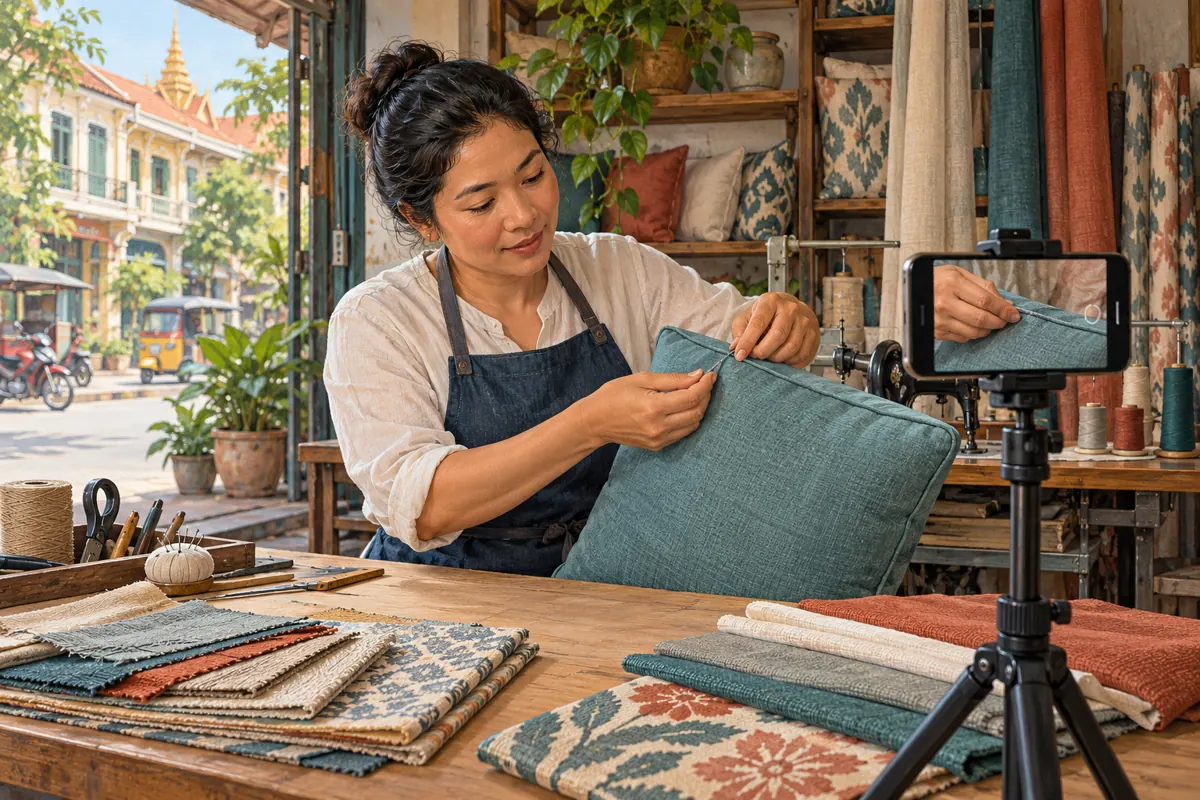
A close-up of a cushion seam can answer a useful buying question, but a short excerpt may lose the explanation that made it accurate. Someone watching a reused clip might mistake a loose teaching sample for a finished customer cushion, or interpret a gentle hand pull as proof of long-term durability. For Cambodian upholstery businesses promoting their work on TikTok, preparing for that possibility belongs in the filming plan. This guide explains how to decide whether a demonstration suits Stitch, keep its meaning understandable and turn genuine questions into useful conversations. It also explains why an SMM panel counter cannot tell you whether viewers understood the seam or want upholstery work.
1. Start with one question a customer actually needs answered
Choose a question about something visible: where the joining seam sits, how piping differs from a seam, or what the inside of a removable cover looks like. These topics give a viewer something concrete to examine. Avoid beginning with a broad promise such as exceptional strength when the footage only shows someone handling a sample.
Consider a hypothetical upholstery shop in Phnom Penh preparing a video for customers replacing dining-chair cushions. Its question is whether the raised edge is decorative piping or the place where two fabric panels join. The shop can show both features on a sample. It does not need to claim that this construction suits every chair, fabric or household.
2. Understand what Stitch changes about the viewing context
TikTok describes Stitch as a feature that lets people clip scenes from another person's video and integrate them into their own. The practical consequence is that your demonstration can become the starting point for somebody else's explanation, question or criticism. Plan for a viewer who encounters that excerpt without first watching your complete post.
TikTok also explains that the creator of a Stitch controls who can watch, comment on and download the newly created content. Your original presentation therefore cannot determine every later viewing context. Treat reuse as a deliberate editorial choice: suitable for a clear public teaching example, but less suitable when the explanation depends heavily on a particular customer's circumstances.
3. Select a sample that can stand on its own
Use a spare sample made for demonstration when possible. Keep the finished cushion nearby to establish scale, then show the separate sample clearly. Do not cut between different fabrics as though they were the same piece. If you need two constructions, introduce each before comparing them and keep their positions consistent throughout the demonstration.
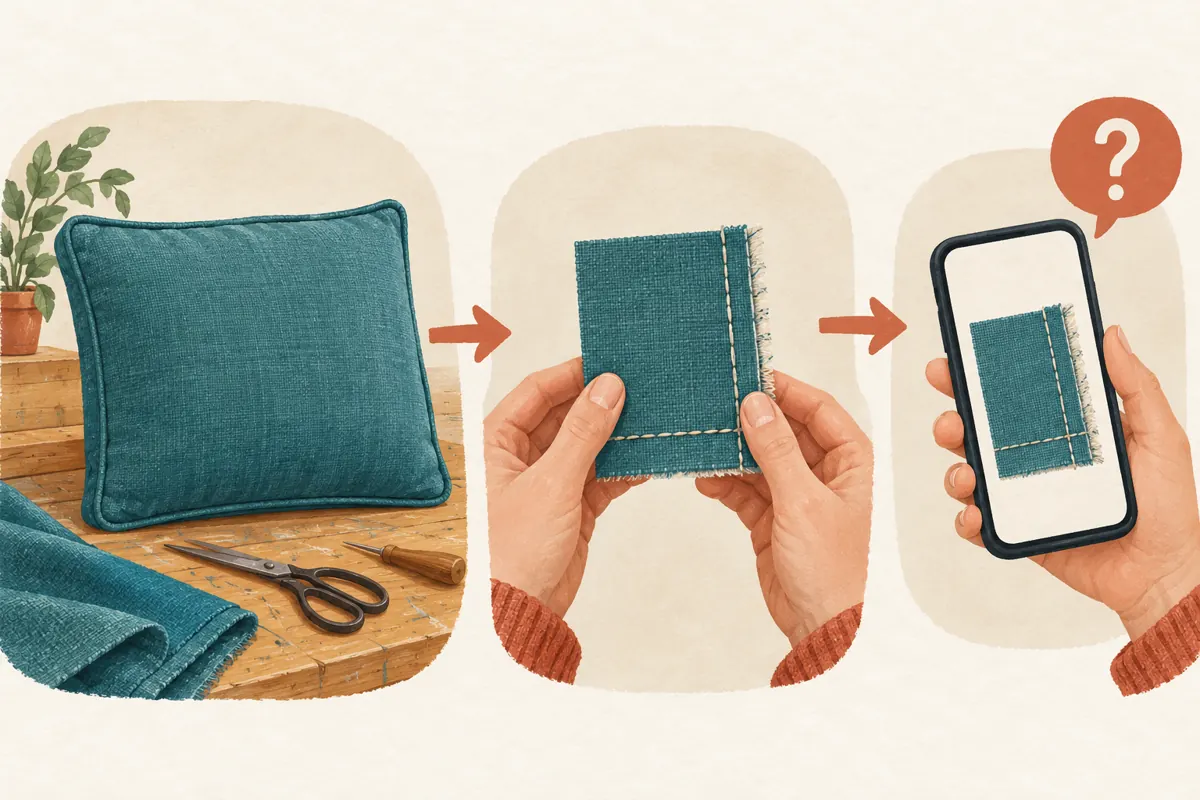
Remove job slips, delivery details and customer photographs from the filming area. A sample also avoids implying that a customer's damaged cushion represents all your work. In the hypothetical Phnom Penh shop, the worker starts with a complete cushion, then holds up a loose section made to explain the seam. The spoken explanation identifies that change immediately.
4. Put the essential qualification beside the action
A qualification at the end of a video may disappear from an excerpt taken earlier. Place the necessary context where the relevant action happens. When opening a sample to show its construction, say that it is a demonstration piece. When gently pulling the fabric, explain that the movement reveals the seam rather than measuring its breaking strength.
Use short, readable on-screen wording if it helps preserve that meaning. For a Khmer-speaking audience, have a fluent colleague check the wording while watching the action. Keep the label away from the fingers and stitch line. Avoid a dense paragraph that hides the detail people came to see. The caption can add background, but the footage should remain understandable without it.
5. Rehearse the excerpt before publishing
Review the opening, the closest seam view and the final demonstration movement as separate fragments. Ask a colleague what each fragment appears to claim. Do they know whether they are looking at a sample, a repair or a finished product? Can they distinguish the seam from the decorative edge? Their answers reveal missing context more effectively than asking whether the video looks attractive.
Repeat the review with the sound muted. Then listen without watching. These checks expose different weaknesses: an unlabeled sample may confuse a silent viewer, while vague phrases such as this part may confuse someone relying on narration. Adjust the shot or wording before recording another take. You do not need to make every fragment a complete tutorial, but none should reverse the intended meaning.
6. Make a deliberate reuse decision
TikTok provides account and individual-video controls for Stitch. Its community-controls guidance also identifies public-account and age eligibility conditions. Check the controls actually available in your current app before promising that customers can Stitch a post. Menu wording can change, so use TikTok's current help and read the scope of any reuse setting you are changing.
Allow reuse when the sample is yours to show, the explanation survives excerpting and you can respond to likely questions. Restrict it when the clip contains customer-specific material or needs a lengthy qualification to remain accurate. If the feature is unavailable, a normal question-and-answer video using your own footage can still serve the customer. Do not download and re-upload another person's material simply to bypass their choice.
7. Invite a useful response without manufacturing approval
A practical invitation asks viewers to identify the construction detail they want explained. For example, the hypothetical shop could ask whether customers want a closer look at the joining seam or the piping attachment. Do not ask people to imitate satisfaction, claim they purchased a cushion or praise work they have not inspected.
If another workshop contributes a Stitch, respond to the substance of its explanation. Different fabric, thread or construction can make a comparison incomplete. State those differences calmly rather than declaring a winner from a short clip. If the post promotes your business, TikTok's Community Guidelines require its content disclosure setting. Treat that disclosure as part of the publishing check, alongside the accuracy of the demonstration.

8. Keep the SMM panel decision separate
The smm-best.com brief lists the exact public service name TikTok Likes ~ Bot Profiles ~ Max 100k ~ 100k/Days ~ Instant ~ 𝐍𝐎 𝗥𝗘𝗙𝗜𝗟𝗟. It is presented as a likes service, but no supporting description was supplied. Its title is not verification of delivery speed, capacity or any other advertised condition. It also provides no evidence that participants would understand an upholstery demonstration.
TikTok's Community Guidelines prohibit services that artificially boost engagement or manipulate its recommendation system. A panel listing does not override those rules. Purchased engagement is not evidence of genuine interest, sales, ad delivery or Cambodian users. For this workflow, do not use purchased likes to validate the clip or make it appear endorsed; spend the review effort on clear footage and authentic questions.
If earlier panel activity already affected a post, record that fact alongside your content review. Do not describe its total likes as customer approval of a seam construction. Keep any service record separate from actual enquiries, measurements received and quotations discussed. This distinction matters even when a dashboard presents all activity together.
9. Turn a genuine question into a manageable enquiry
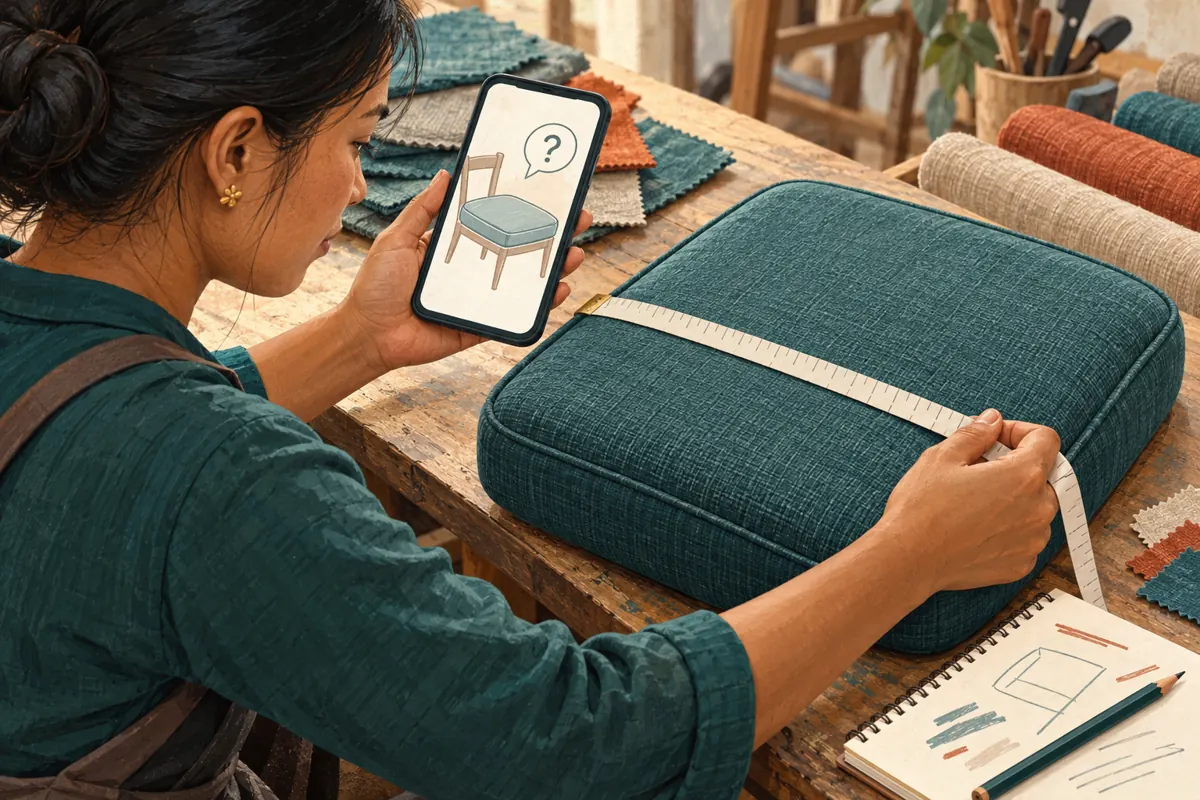
Prepare the next step before inviting responses. A viewer asking whether the same seam works for their chair needs a way to explain the chair, cover and intended use. Ask for a clear product photograph and the relevant dimensions through your established enquiry channel. Keep personal contact details and delivery addresses out of public comments.
In a hypothetical follow-up, a Battambang customer asks whether an existing cushion cover can be copied. The shop requests photographs of the cover's outside, inside seam and closure, then explains what needs inspection before quoting. That is a meaningful business conversation. It remains an enquiry until the scope and terms are agreed; neither a Stitch nor a friendly comment makes it a confirmed order.
10. Review misunderstandings before expanding the promotion
After publishing, collect the questions that reveal uncertainty. Separate construction questions from availability questions and quotation requests. If several people mistake the loose sample for a damaged finished cushion, revise the explanation in your next video. If people understand the sample but ask about fabric choices, prepare a separate demonstration rather than overloading the original.
Common mistakes include showing a dramatic pull without explaining its limits, relying on the original caption to accompany every excerpt, inviting reuse before checking its availability and treating disagreement as abuse. Another is interpreting a quiet post as proof that the workmanship is poor. A small response leaves many explanations open. Judge whether the content communicates accurately before drawing conclusions about demand.
Frequently asked questions
Should every upholstery demonstration allow Stitch?
No. A generic construction example is usually easier to explain in an excerpt than a customer-specific repair assessment. Decide according to the material shown and how much context it needs. If a short fragment could imply an unsupported guarantee or expose a customer's job, prepare a different teaching sample or restrict reuse.
Can a hand-pull demonstration prove that a seam will last?
It can show how the particular sample looks while being handled, but it does not establish long-term durability. Fabric, construction, use and other conditions matter. Describe the visible action accurately and avoid turning it into a measured strength claim. If customers ask about suitability, discuss their intended application and the product information you actually have.
What should we do if a Stitch misidentifies our sample?
First check exactly what the excerpt shows and what the creator says. Offer a short factual clarification that identifies the sample and explains its purpose. Link to the fuller explanation where appropriate. If the original video was ambiguous, improve your own presentation too. Avoid repeating private customer information while correcting the misunderstanding.
Does a higher like count show that Cambodian buyers trust the construction?
No. A like count does not establish location, understanding, purchase intent or an independent assessment of workmanship. Purchased likes are especially unsuitable as evidence of customer trust. Look instead at the substance of genuine enquiries, while remembering that even a detailed question is not a sale or a representative survey of the market.
How can a small team review this without creating too much work?
Give one person responsibility for the construction explanation and another for viewing the proposed excerpts without background information. Keep a short record of the sample, the intended claim, the reuse decision and recurring questions. Review those notes when preparing the next demonstration. The purpose is to catch misunderstandings early, not to build a complicated reporting system.
Explore the current service catalogue, create an account, or ask a specific question through support tickets.
- TikTok Newsroom: New on TikTok — Introducing Stitch
- TikTok Safety: Community controls
- TikTok Community Guidelines
Prepared with AI assistance. Illustrations explain the workflow and do not represent customer results.