21/10/2026 07:10
Wheel or Complete Housing? YouTube Pinned Comments for Cambodian Luggage-Repair Shops
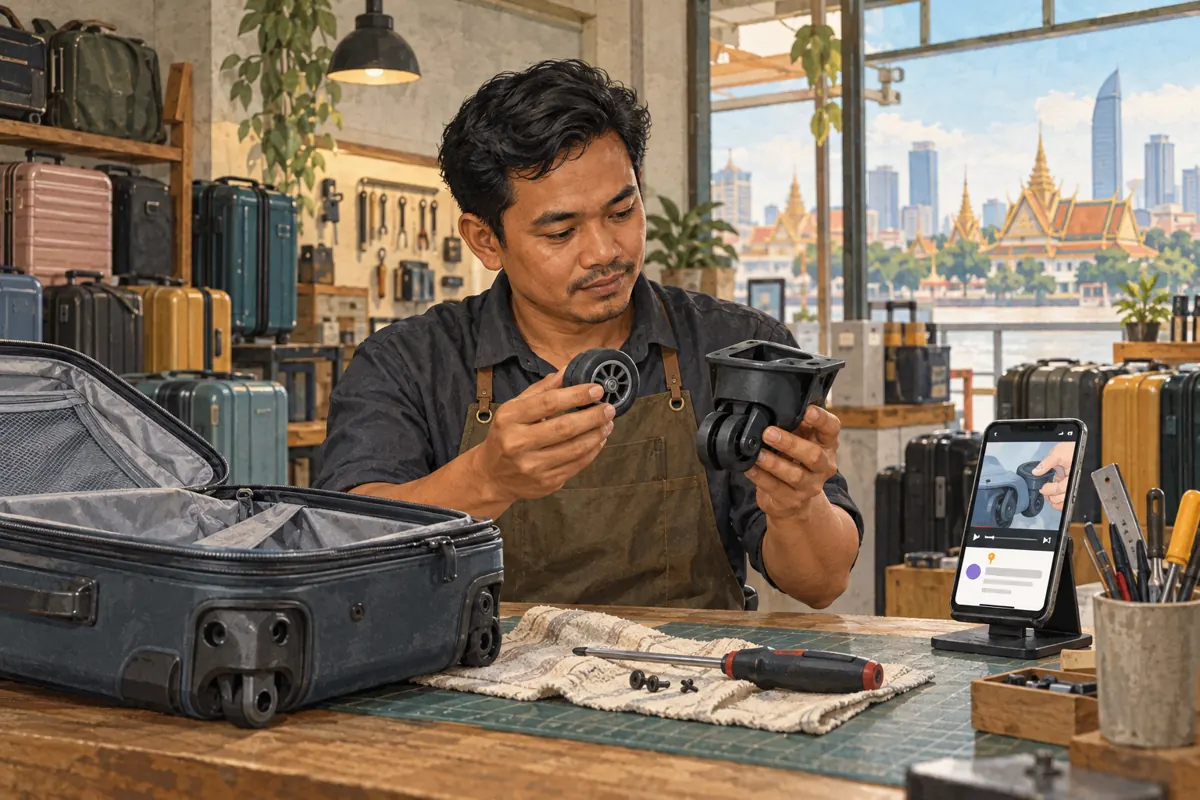
A suitcase repair video can show a wheel turning smoothly without answering the buyer’s most important question: does the offer include only the wheel, or the complete housing that attaches to the case? For a Cambodian repair shop promoting demonstrations on YouTube, that uncertainty can follow viewers into every conversation. A useful pinned comment provides a short clarification and tells customers what information to prepare. This guide explains how to choose that clarification, check its visibility and connect it to a practical enquiry process. It also shows where SMM panel decisions belong: after the offer is understandable, with platform policy and the limits of purchased engagement considered separately.
Start with the misunderstanding that blocks an enquiry
Consider a hypothetical luggage-repair shop in Phnom Penh. Its video demonstrates replacing a complete caster assembly, but customers keep asking for the price of “the wheel.” Some mean the round rolling part; others mean the wheel, bracket and mounting housing together. A cheerful reply asking them to visit the shop leaves that distinction unresolved. The pinned comment should explain exactly which component appears in the demonstration.
Before drafting, ask the person who handles repairs to identify the most consequential missing detail. It might be the component supplied, whether fitting is included, or whether compatibility requires inspection. Choose one main clarification. Combining every repair condition, delivery arrangement and opening hour into the pin makes the useful answer harder to find. Keep a separate reference for the fuller service terms.
Give the pinned comment a supporting role
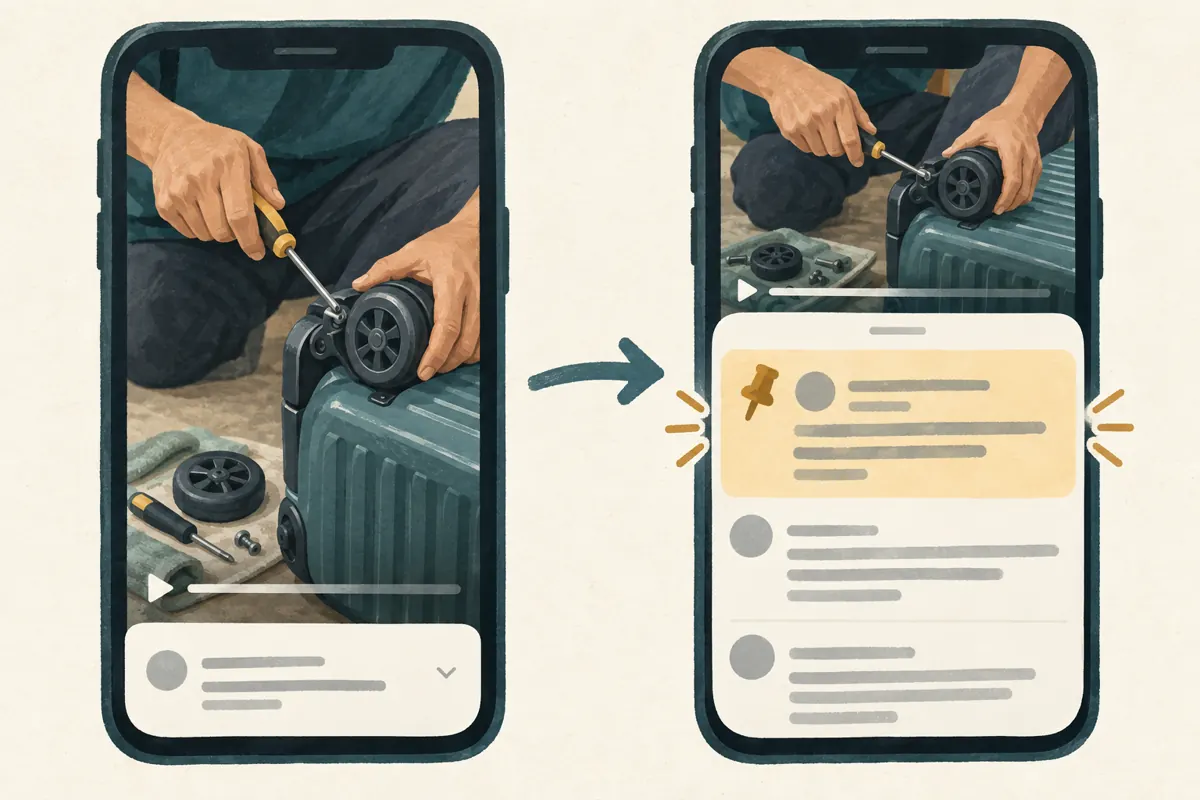
YouTube’s official guidance says pinning highlights a comment at the top of the comment section. On mobile, viewers must expand comments to see it; a pin does not guarantee inclusion in the comment preview. YouTube also requires access to advanced features for pinning. These details matter because a customer watching briefly may never encounter the clarification.
Put essential offer information in the demonstration itself and its description as well. If the footage implies that every suitcase accepts the same housing, a comment is an inadequate repair for that claim. Revise the presentation before promoting it. Use the pin to reinforce the next useful action, such as asking the shop to assess a photograph, rather than making it the sole location of an important limitation.
Write a compact answer with a clear next step
A practical draft has three parts: identify what is shown, explain the unresolved condition, and request the next piece of information. For this hypothetical shop, the English working draft could read: “This demonstration shows a complete wheel housing. Suitcase fittings vary, so please ask us to check your existing assembly before ordering. Use the shop contact listed in the description to send a clear underside photo. Keep personal details out of public comments.”
For a Khmer-speaking audience, have a fluent staff member write the customer-facing version in natural Khmer. Keep any genuine model code exactly as printed on the part. Ask another colleague to explain the draft back in their own words: do they understand what is included and what remains unconfirmed? That quick check is more useful than simply asking whether the wording sounds professional.
Prepare a photograph request staff can actually use
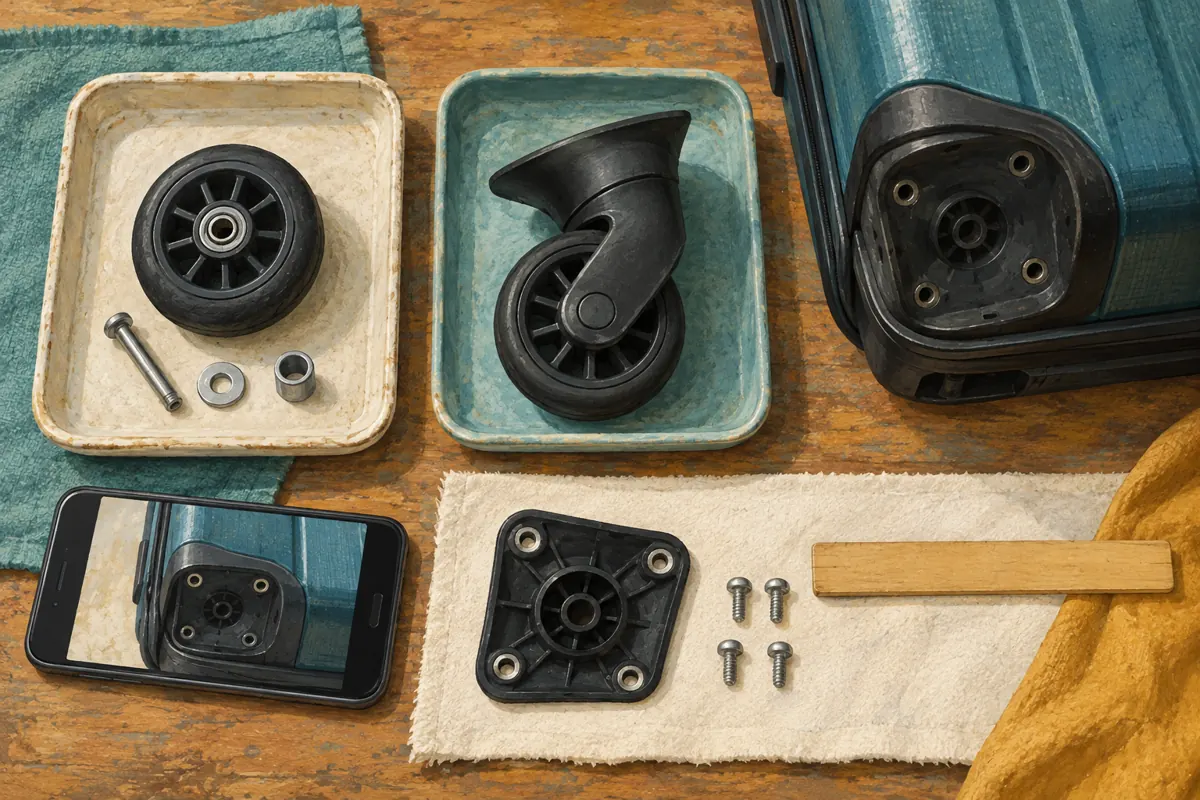
A vague instruction to “send a photo” can produce an attractive picture of the whole suitcase while hiding its mounting points. Decide which views help your technician assess the enquiry. An overall view of the affected corner and a closer view of the existing housing may be a useful starting point. Request measurements only when staff can explain where to measure and which unit to use.
Do not ask customers to dismantle a case merely to satisfy a social media checklist. If the relevant area is inaccessible, offer an inspection route that your shop can genuinely provide. Remind customers to exclude luggage labels, travel documents and personal belongings from photographs. Treat the images as preliminary information: a visual resemblance alone should not become a promise that a replacement will fit.
Publish the clarification and verify the pin
Using the shop’s channel, open the video’s comments and post the approved clarification. YouTube’s documented desktop process is to select the comment’s More menu, choose Pin and confirm. Pinning another comment replaces the existing pin. Before doing that, check whether the previous highlighted message contains information that still needs a visible home.
Afterward, open the video on a phone and expand the comments. Read the message as a prospective customer would, then inspect the description and the contact information it references. Check that the component name agrees with the demonstration. Assign one staff member to maintain the clarification and another to report contradictions noticed while answering enquiries. The owner of the wording should be clear even when several people manage customer messages.
Move from public clarification to private assessment
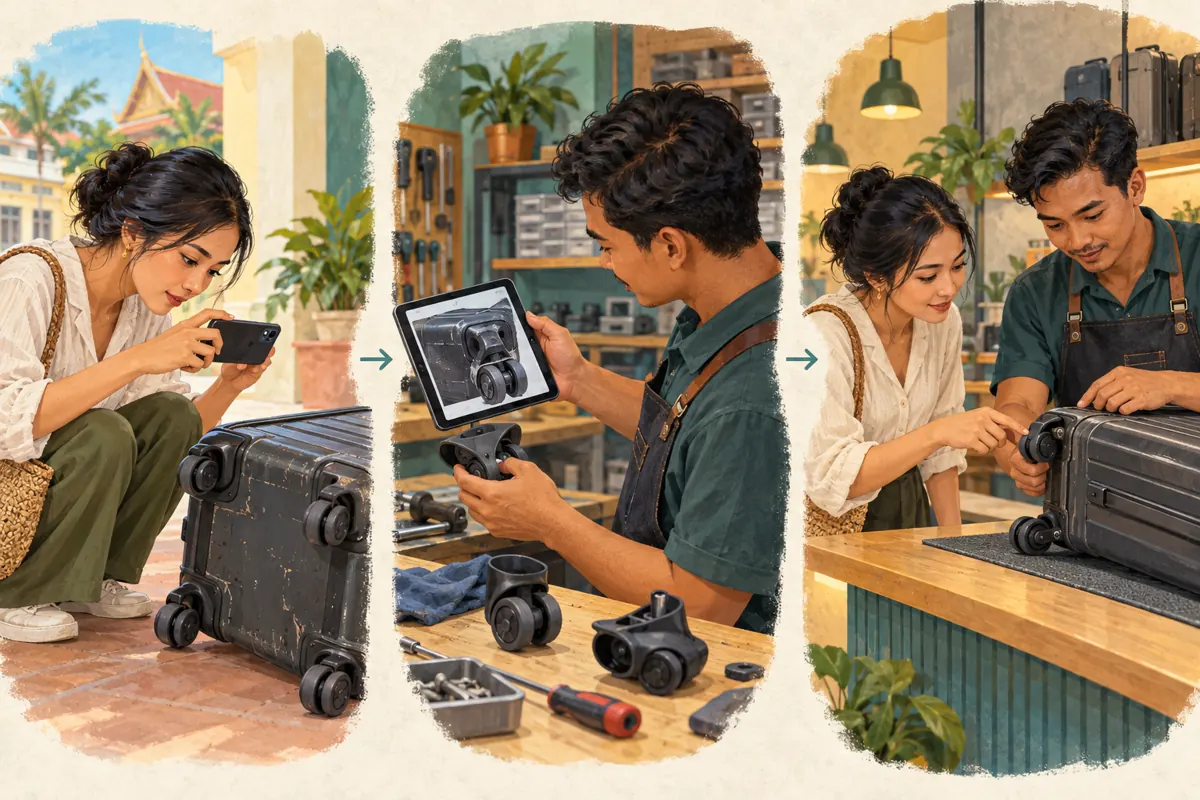
The public comment should answer a general question without collecting an individual customer’s order details. In this hypothetical workflow, staff respond publicly to “Does this fit my suitcase?” by explaining that the fitting needs checking and pointing to the shop’s established contact route. They then assess photographs privately and request only the additional information necessary for the repair.
Separate the stages in staff replies: enquiry received, assessment needed, compatibility confirmed where possible, and quotation supplied. Receiving a photograph does not reserve stock or confirm an appointment. For customers outside Phnom Penh, establish whether they want to bring the case in or enquire about sending it before discussing arrangements. State only the options the business actually supports, and avoid requesting a full delivery address during the initial identification stage.
Decide whether an SMM service addresses the problem
A confusing offer is a content problem. Additional views or likes cannot establish which replacement housing fits a customer’s suitcase. The supplied smm-best.com catalogue includes the exact service name “YouTube Like ~ Max 100k ~ 50k/days ~ Instant ~ 𝐍𝐎 𝗥𝗘𝗙𝗜𝗟𝗟”. Its title identifies a YouTube-like service, but the brief supplies no description explaining its delivery method. The remaining title claims are not independently verified evidence.
YouTube’s fake engagement policy prohibits artificial increases to engagement metrics and explains that a hired promoter’s actions can affect the channel. Before considering any service, establish how it operates and whether that method complies; decline methods that artificially inflate engagement. A catalogue listing does not establish official affiliation or policy compliance. Purchased engagement also cannot demonstrate genuine interest, sales, ad delivery or Cambodian users. For this workflow, clear product information and useful responses are the immediate priorities.
Review actual questions instead of celebrating a counter
Keep a small enquiry log focused on the information customers provide. Useful entries include the video they mention, which component they want, whether their first photograph shows the relevant area, and what clarification staff had to request. Record an unknown source as unknown. A customer who arrives after a video was shared elsewhere may not know where they first encountered it.
In a hypothetical weekly review, staff might notice that people now distinguish the wheel from its housing but still omit a view of the mounting area. That suggests improving the photograph instruction or filming a short example. It does not establish that the pinned comment caused a sales change. Compare questions and repair outcomes separately from viewing figures, and avoid treating a small collection of conversations as a reliable market survey.
Keep the clarification accurate as the offer changes
Review the pin when the demonstrated part changes, fitting arrangements change, or staff repeatedly explain an exception. For example, a hypothetical replacement assembly might be unavailable while the demonstration remains useful for identifying components. Make that distinction explicit wherever the video presents availability. Do not leave an old offer active merely because the demonstration continues attracting attention.
Maintain a short internal record containing the video reference, approved wording, review date and reason for any revision. When changing a message that has replies beneath it, consider whether the conversation will still make sense. If an answer depended on an earlier offer, clarify the context instead of silently making the exchange misleading. This record helps a colleague understand the wording without reconstructing the entire repair discussion.
Avoid mistakes that make the pin less useful
One common mistake is highlighting praise while the same compatibility question appears repeatedly. Another is putting the clarification at the end of a long sales message. Lead with the component distinction, then provide the next step. Avoid phrases such as “fits all luggage” unless the business can substantiate them for the actual product; a clear demonstration of one repair does not establish universal compatibility.
Do not invite customers to publish phone numbers, addresses or booking details beneath the video. Avoid copying a customer’s private enquiry into a public example without permission. Finally, do not turn the highlighted comment into a demand for likes before assistance. The useful exchange is straightforward: explain the part, collect suitable information through the appropriate channel, and give an honest assessment of what the shop can do.
Frequently asked questions
Should the shop pin its own explanation or a customer’s question?
For a component clarification, the shop’s own explanation is usually easier to maintain and approve. A customer’s genuine question can be useful context, but review the full exchange before highlighting it. Avoid making an individual case appear representative of every repair, and do not highlight personal details simply because the question is relevant.
What should we do if the Pin option is unavailable?
Check that you are using the intended channel and that it has access to advanced features. YouTube notes that enabled advanced features may take up to 24 hours to appear across a channel. Meanwhile, keep the essential clarification in the video description and use ordinary replies where available. Do not delay correcting a misleading offer while waiting for pinning.
Can a photo confirm that a replacement will fit?
A photo can help narrow the enquiry, but it may leave dimensions, attachment details or damage unclear. Let the technician decide what additional information is required. If inspection is necessary, explain that before quoting a confirmed repair. Avoid letting a friendly social media response sound like technical approval when staff have only seen an overall suitcase photograph.
Should every repair video use the same pinned comment?
Reuse the structure, then adapt the substance. A wheel replacement, handle repair and zip repair need different identification information. Check each draft against its particular footage and offer. A generic instruction to contact the shop misses the opportunity to explain the one detail that would make the first conversation more productive.
How can we tell whether the clarification is helping?
Look for practical evidence in conversations: customers naming the intended component, sending a useful first photo, or understanding that inspection remains necessary. Note continuing misunderstandings and revise accordingly. These observations can guide content improvements, but they do not prove causation. Keep confirmed repair bookings, sales and social engagement records distinct.
Explore the current service catalogue, create an account, or ask a specific question through support tickets.
Prepared with AI assistance. Illustrations explain the workflow and do not represent customer results.