19/10/2026 21:59
Can a Quiz Teach Before It Sells? Telegram Quiz Polls for Cambodian Barista Classes
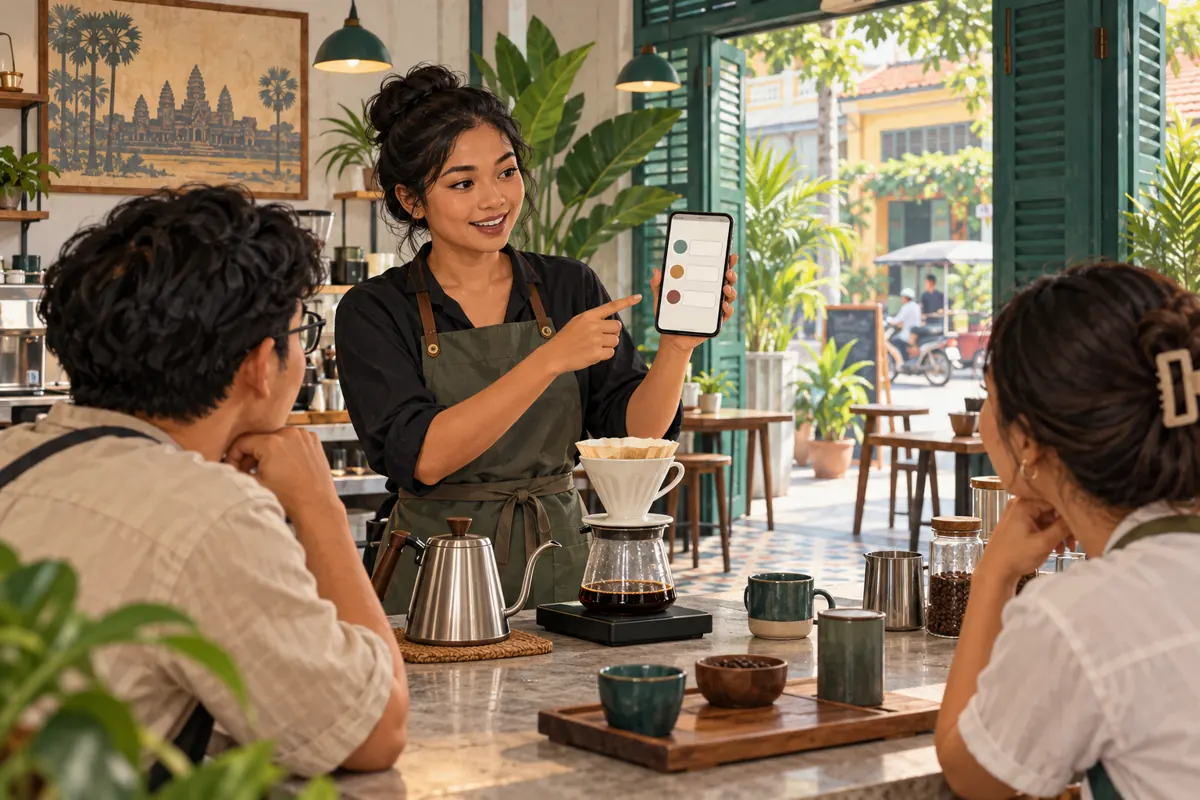
A short coffee lesson can give prospective students something useful before they decide whether to enquire about a class. For a Cambodian barista trainer, a Telegram quiz offers a practical format: show one familiar situation, ask a clear question, and explain the answer. The challenge is making that interaction educational without treating every response as a potential booking. This workflow follows a hypothetical Phnom Penh training café preparing a beginner quiz about weighing coffee beans. It covers question design, Telegram settings, testing, follow-up and the separate decision about SMM panel services. The aim is a small, understandable lesson that stands on its own, even when the reader never buys anything.
1. Decide whether the question belongs in a quiz
Start by identifying what a learner should understand after responding. For the hypothetical café, the objective is to distinguish the weight of coffee beans from the combined weight of beans and their container. That is narrow enough to explain in a short message and demonstrate with ordinary equipment. A broad question such as how to make excellent coffee would require too many qualifications.
Use a quiz when you can justify the answer from the information supplied. Use an ordinary preference poll when asking which class time people prefer or which drink they enjoy. Those questions have no correct answer. Use a direct enquiry route when someone needs a fee, availability or booking confirmation. Keeping these purposes distinct prevents a teaching activity from becoming a confusing registration form.
2. Write the lesson before writing the promotion
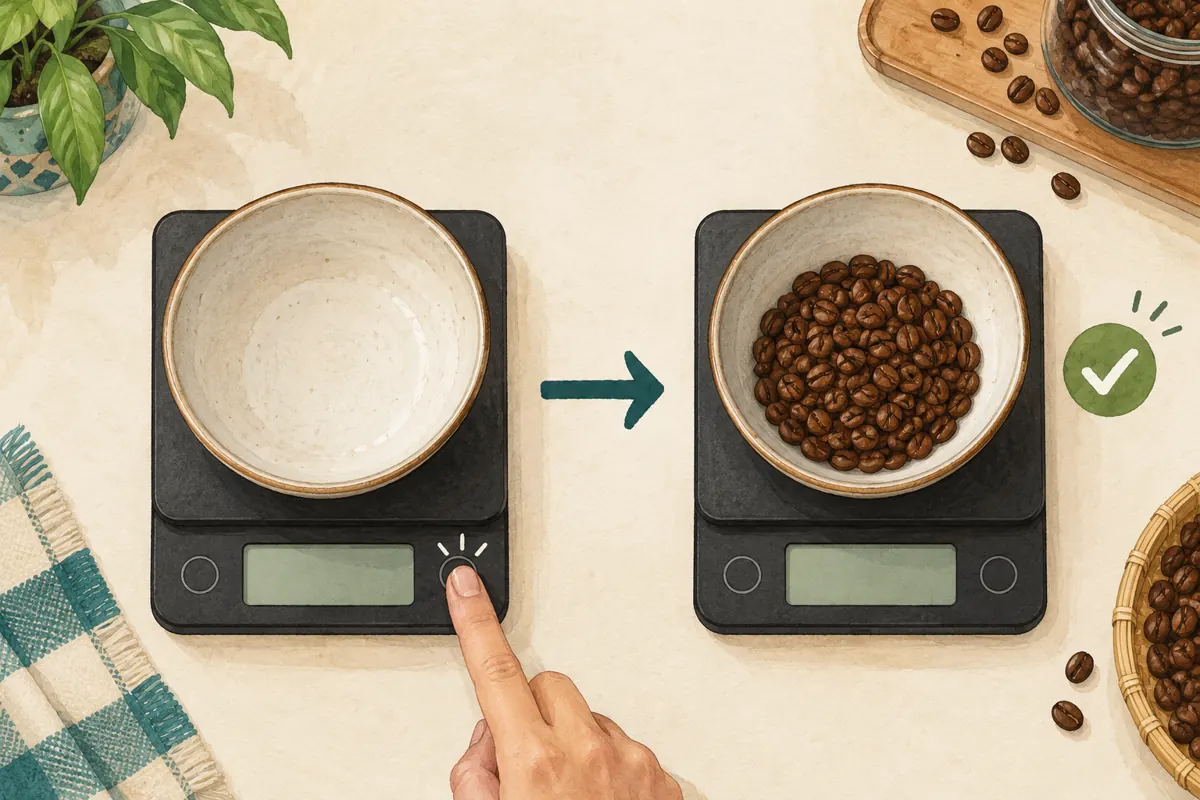
Draft the explanation first. In this hypothetical example: placing the empty container on the scale and using tare establishes a zero reading with that container in place; adding beans then lets the display represent the added beans. Check the actual scale before filming, because button labels and operation can differ. The instructor should demonstrate the equipment that students will encounter.
Then build the question around that explanation: “You want to weigh only the beans in this bowl. What should you do before adding them?” Possible answers are “Place the empty bowl on the scale and tare it,” “Add the beans before putting the bowl on the scale,” and “Choose a larger bowl.” These are illustrative teaching choices, not a claim about a real class. Avoid including a course offer inside every answer.
3. Make the wording accessible to your Cambodian learners
Choose the language your intended learners use comfortably. A Khmer-speaking beginner group may need a short Khmer explanation of tare even when the equipment has an English button label. Preserve the real label where it helps someone find the control, but explain its purpose in familiar language. Have a fluent colleague review both the question and every answer; translating only the correct option creates an uneven test.
Keep the context self-contained. A learner arriving from a shared post should know that the question concerns an empty bowl and dry beans, rather than brewed coffee or a different weighing step. An original close-up photograph can establish the objects. Remove distracting packaging and unrelated equipment. On a small phone, a simple bowl-and-scale image communicates more clearly than a wide classroom photograph filled with details.
4. Build a simple quiz in Telegram
In the intended group or channel, open the attachment menu and choose Poll. Enter the question and options, select the quiz settings, and identify the correct answer. Telegram documents this basic creation route in its introduction to quiz polls. Check the final configuration in your own app before sending. [Telegram’s quiz-poll guide](https://telegram.org/blog/polls-2-0-vmq)
For this beginner exercise, deliberately use one correct answer. That is a teaching choice, not a claim that Telegram only supports single-answer quizzes. Telegram’s newer poll settings also support quizzes with multiple correct options and revoting. Decide whether you want a first attempt or a practice exercise where learners can reconsider, and explain that choice in the introduction. [Telegram’s updated poll features](https://telegram.org/blog/ai-editor-mighty-polls-and-more)
Avoid enabling extra features merely because they are available. One clear question with fixed choices is easier to review than an activity with changing options, several correct answers and a competitive deadline.
5. Make the explanation useful after a wrong answer
Telegram supports explanations that appear as people respond to quiz questions. Use that space to teach the principle rather than congratulate or criticise the participant. A helpful explanation identifies the action, explains its purpose and points back to the demonstration. [Telegram’s educational quiz explanations](https://telegram.org/blog/400-million)
For the hypothetical scale question, explain that the container has weight too, so the displayed total needs to exclude it when the recipe calls for beans alone. Do not simply write “The first answer is correct.” That wording gives little help and can become confusing if answer order changes. Name the action itself: place the empty bowl on the scale, tare it, then add the beans.
Keep the answer available without requiring a sales conversation. If the explanation needs a longer demonstration, publish a companion lesson with enough context to recognise it. A learner should not have to provide a phone number just to understand why an answer was wrong.
6. Test the quiz as a learner would experience it
Create a rehearsal version in a private test group with a colleague before posting to the public learning channel. Ask the colleague to read it without your verbal help. Can they identify the task, understand each option and explain the reasoning afterward? If they choose an unexpected answer, first inspect the wording. An ambiguous question can look like a knowledge gap.
Test the explanation and the selected answer as well as the visible question. Check line wrapping, image clarity, spelling and whether the lesson still makes sense without sound. Review the vote-visibility setting and tell participants what to expect. For an introductory activity, anonymous participation may be the more comfortable editorial choice; verify the setting instead of assuming it.
Use the test to catch mistakes before inviting a wider audience. If a published quiz later proves inaccurate, stop promoting that version, post a clear correction and direct readers to the replacement. Do not quietly interpret responses to a flawed question as evidence of learner ability.
7. Give the quiz a clear place in the promotion sequence
Publish a short introduction explaining who the lesson is for and what it covers. The hypothetical café might describe it as a beginner exercise about using a coffee scale. Follow with the quiz and a concise demonstration or explanation. A separate class-information post can then describe the actual teaching language, location, session format and confirmed arrangements.
Make the commercial next step optional and specific: invite readers to request the current beginner-class details through the café’s stated contact route. A quiz answer is not a seat reservation, and a message asking about a class is not a confirmed booking. Staff should explain the real booking process when someone enquires, including any information still awaiting confirmation.
Share the lesson where it is welcome. Telegram’s spam guidance warns against unwanted messages to strangers and unwanted additions to groups or channels. Do not turn visible participation into a list for unsolicited sales messages. [Telegram Spam FAQ](https://www.telegram.org/faq_spam?setln=en)

8. Make the SMM panel decision separately
A useful quiz does not automatically require a panel order. First ask what problem remains. If the question is confusing, revise it. If class details are missing, complete them. If the current audience has practical questions, answer those. Purchasing a count cannot repair the lesson or tell the trainer whether learners can perform the task.
One exact catalogue reference in the brief is “Telegram Post Share ~ Max 100k ~ 100k/day ~ Instant ~ 𝐍𝐎 𝗥𝗘𝗙𝗜𝗟𝗟”. Its title identifies a post-sharing service, but the supplied description is empty. The title alone does not establish how sharing happens, where recipients are located, whether a quiz post is eligible, or whether any recipient will participate. Treat the embedded capacity and timing language as catalogue wording, not independently verified results.
Before considering a service, seek a clear description of its method, target requirements and relevant platform compliance. Skip it if the method or suitability remains unclear. Purchased engagement is not evidence of genuine interest, Cambodian users, sales or official ad delivery. Do not present service activity as student endorsement, and do not assume that an unlisted quiz-voting service exists.
9. Read responses as teaching clues
Review which ideas appear to need another explanation. In a hypothetical follow-up, several learners might ask whether changing bowls changes the reading. That question suggests a useful demonstration with two empty containers. It does not prove the original lesson failed: readers may be checking their understanding or applying the idea to equipment at home.
Keep three separate records: quiz observations, voluntary class enquiries and any promotional service records. In the teaching notes, record the question version and recurring confusion. In the enquiry record, note what someone actually requested and the confirmed booking status. In the service record, preserve the catalogue reference and delivery information without converting it into learning evidence.
Do not claim improvement simply because more later responses are correct. Different people may have responded, the explanation may already be visible, or the settings may allow another attempt. Practical understanding needs a practical check, such as asking a learner to demonstrate the weighing step and explain it in their own words.
10. Avoid mistakes that weaken the lesson
Do not use taste preferences as if they were universal facts. “Which coffee tastes best?” invites opinion, while a question about following a clearly demonstrated weighing step can have a defensible answer. Avoid trick wording, double negatives and answer choices that differ mainly in reading difficulty. The activity should reveal understanding of the lesson rather than familiarity with test-taking conventions.
Do not attach prizes, rankings or public judgements to a casual beginner exercise without a clear reason and suitable arrangements. A promotional quiz is not a professional certification. Likewise, do not describe people who answered correctly as successful graduates or satisfied customers. Their response establishes neither claim.
Keep a reusable master containing the question, correct answer, explanation, image and reviewer’s notes. Before reusing it, check the equipment, class-information link and contact route. Preserve the useful lesson while updating the practical details that could otherwise send a Cambodian learner to an outdated offer.

Frequently asked questions
Should the first quiz be difficult enough to impress experienced baristas?
Match the question to the intended class. A beginner offer benefits from an understandable task that previews the instructor’s teaching style. Advanced terminology can exclude the people the class is meant to help. If experienced learners also follow the channel, label the exercise clearly and give them a separate, appropriately scoped activity later.
Can the trainer use wrong answers to decide what to teach next?
Yes, as a starting point for review. Examine whether the question supplied enough context and whether the alternatives were fair. Then look for recurring questions or ask learners to explain their reasoning voluntarily. A selected option alone does not reveal whether someone misunderstood the concept, misread the wording or simply guessed.
Does a correct quiz answer show that someone is ready to work in a café?
No. Recognising a written answer differs from performing a task consistently with real equipment. Use the quiz as a brief learning activity. Any assessment of practical readiness should involve suitable observation and clear criteria, rather than a promotional poll result or a screenshot of correct answers.
Should we order shares when the quiz receives few responses?
Not automatically. First check whether the lesson is understandable, the audience expected it and the invitation explains its value. Low participation does not identify the cause. A sharing-service title cannot establish relevant distribution or learning outcomes. If the service method and fit cannot be verified, keep improving the lesson and use appropriate, voluntary sharing routes.
What if someone asks about booking underneath the lesson?
Answer the practical question and direct them to the stated booking route. Confirm the current class details before requesting a commitment. Keep their learning response separate from the enquiry, and record a booking only when the actual confirmation process is complete. Avoid asking them to post personal contact or payment details publicly.
Explore the current service catalogue, create an account, or ask a specific question through support tickets.
- Telegram: Polls 2.0 — Visible Votes, Multiple Answers, and Quiz Mode
- Telegram: AI Editor, Mighty Polls, Live Photos, Bots Managed by Bots, and More
- Telegram: Better Quizzes and Educational Explanations
- Telegram Spam FAQ
Prepared with AI assistance. Illustrations explain the workflow and do not represent customer results.