19/10/2026 11:34
Can Customers Share Just the Useful Part? YouTube Clips for Cambodian Camping Shops
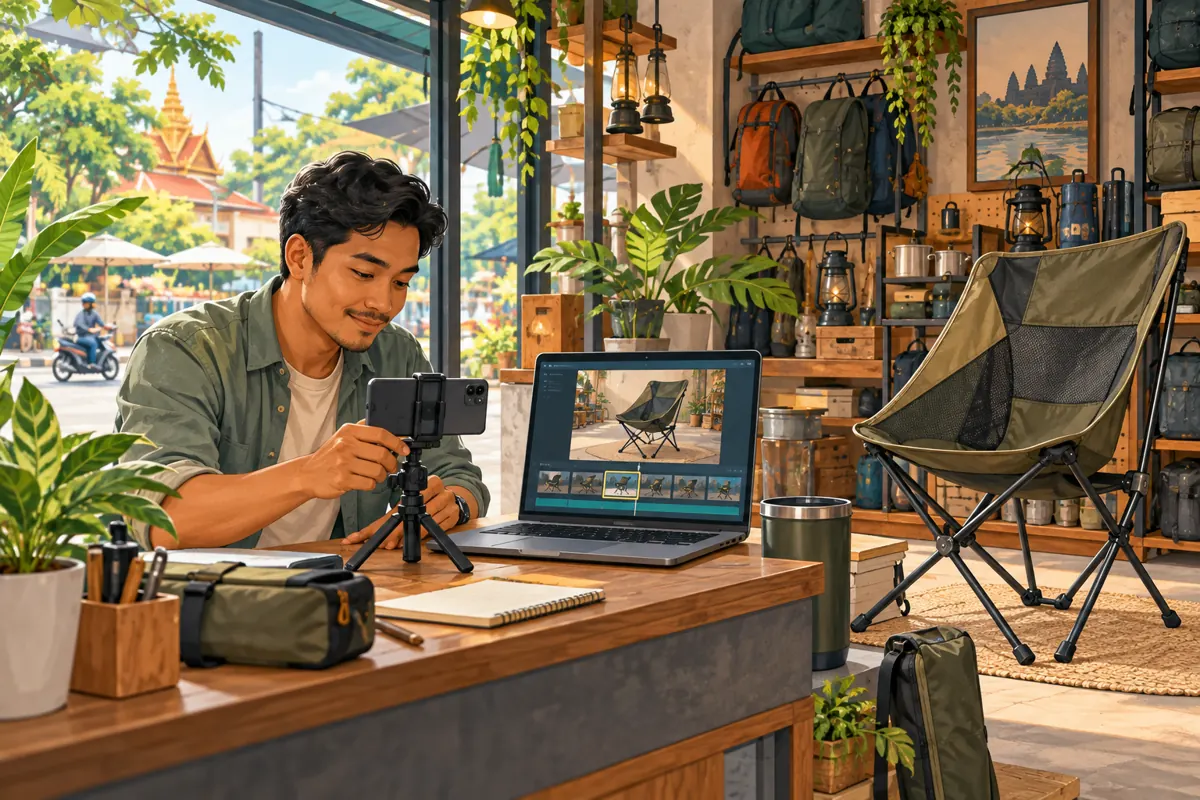
A customer wants to see how a camping chair folds, but your shop’s video also covers tents, bags and lanterns. Sending the whole demonstration may leave them searching for the relevant moment. A carefully chosen YouTube Clip can make that answer easier to share. The editorial challenge is choosing a short passage that still tells the truth about the product. This guide uses a hypothetical Cambodian camping shop to explain how to select, check and maintain useful excerpts, and how to decide whether an SMM-panel service has any place in the task. All shop scenarios are illustrative, not customer results.
1. Start with one question the excerpt can answer
Imagine a Phnom Penh camping shop receiving questions about whether its folding chair comes apart or collapses into one piece. Its existing demonstration shows the answer clearly, but only after an introduction to several products. The shop’s immediate objective is to help a shopper understand the folding action. It does not need to turn every moment of the video into promotional material.
Write the intended question before selecting footage: “How does this chair fold into its carry bag?” Then identify what someone must see to understand the answer. That might include the open chair, the folding movement and the packed result. If the recording never shows the final step, acknowledge the gap. A new close-up may serve the customer better than an attractive excerpt that stops before the answer.
Choose a question about a visible action. Comfort, long-term durability and suitability for every traveller require evidence that a brief demonstration cannot supply.
2. Understand the Clip before planning promotion
YouTube describes Clips as public, shareable excerpts lasting 5–60 seconds that loop from the original video’s watch page. Viewers must also be able to watch the source video. This makes the source important to the sharing plan.
For the hypothetical shop, treat the Clip as a convenient doorway into an existing explanation. Give it a narrow job, such as showing the chair’s packed form. Do not expect it to function as a complete product listing, booking confirmation or independent guarantee about the item.
Make a practical distinction in your content notes between the full demonstration and the selected excerpt. Record which customer question each one answers. Someone comparing several chair models may need the full discussion; someone checking a folding mechanism may appreciate the shorter passage. Choose the format by the information required, rather than assuming that shorter always means more useful.
3. Select a complete action with its necessary context
Watch the candidate passage from slightly before the intended beginning to slightly after the intended ending. Listen for qualifications that could be lost. A speaker might say that a carry bag is sold separately immediately before showing it. Starting after that sentence could create the wrong impression, even though every selected frame is authentic.
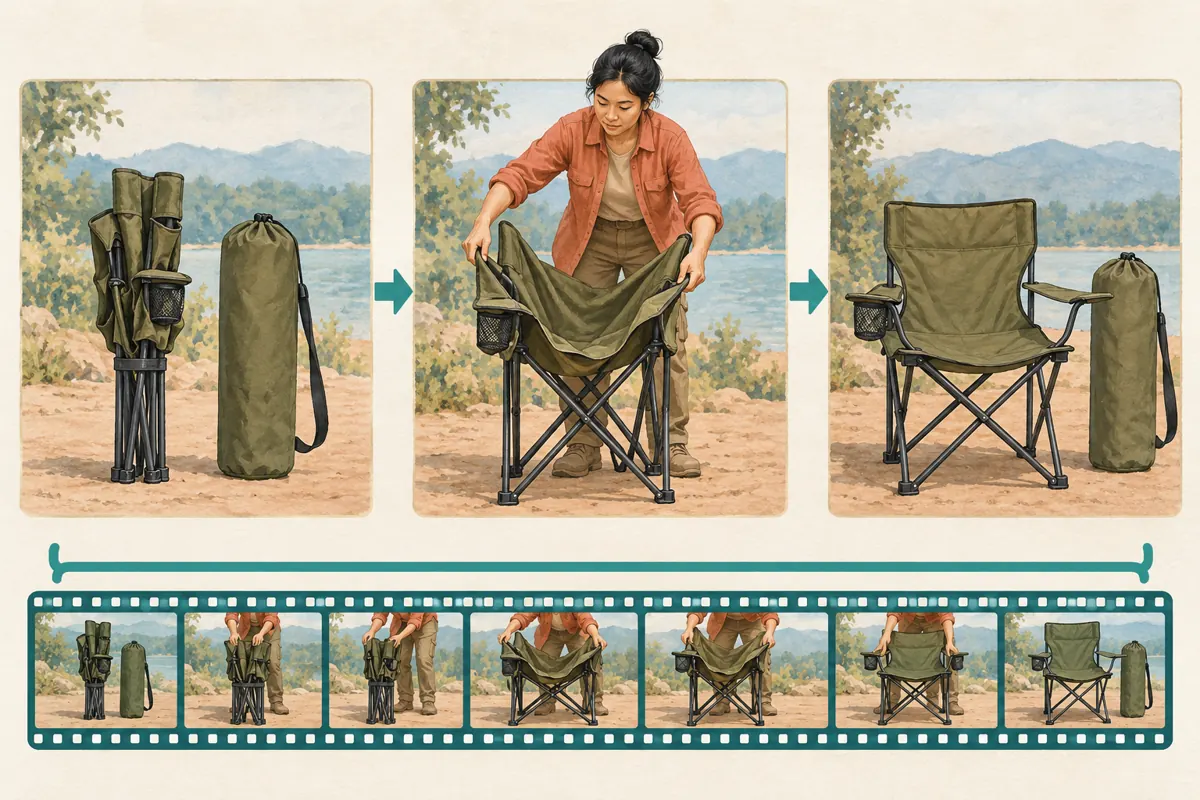
In our hypothetical example, the strongest excerpt starts with the correct chair already visible, includes the complete folding movement and finishes with the packed chair beside its bag. The narration identifies the model without claiming that every chair in the shop works the same way. If essential information cannot fit comfortably, share the longer explanation or film a focused answer.
Avoid choosing a boundary simply because the movement looks dramatic. Check whether hands obscure the mechanism, another model enters the frame or the speaker changes the subject. The best boundary follows a complete thought and action.
4. Create the Clip and title the visible action
On desktop, YouTube’s documented workflow is to open the video, choose More and Clip, enter a title, adjust the selection and choose Share clip. Titles can contain up to 140 characters. Copy the resulting link for review.
Use an accurate title such as “Folding this camping chair into its carry bag.” Include your model reference if it helps distinguish similar products. Avoid claims such as “Cambodia’s strongest camping chair” when the footage only shows folding. A title should help a recipient identify the answer without enlarging the promise.
For a Khmer-speaking customer, prepare the accompanying explanation in natural Khmer and have a fluent colleague check product terms. Keep model codes consistent with your stock records. If a customer is comparing two similar chairs, a clear model identifier is more useful than a string of promotional adjectives. Treat the title and accompanying message as part of the demonstration’s meaning.
5. Test the shared experience on a customer’s phone
Ask a colleague who did not select the footage to open the copied link on a phone. Give them the customer question without explaining the intended answer. Ask what they think the demonstration establishes and what remains uncertain. This exposes missing context more effectively than asking whether the Clip looks good.
Check the first visible moment, the full action and the ending. Listen through earphones and through the phone speaker at an ordinary volume. If a crucial qualification is difficult to hear, do not assume that a short accompanying message will repair every misunderstanding. Choose a clearer passage or improve the underlying explanation.
In the hypothetical shop test, the colleague might correctly understand the folding action but mistakenly believe the bag is included. That is a reason to revise the selection or message before sharing. Record the misunderstanding in concrete terms so the person making the correction knows exactly what to fix.
6. Share an answer with a useful next step
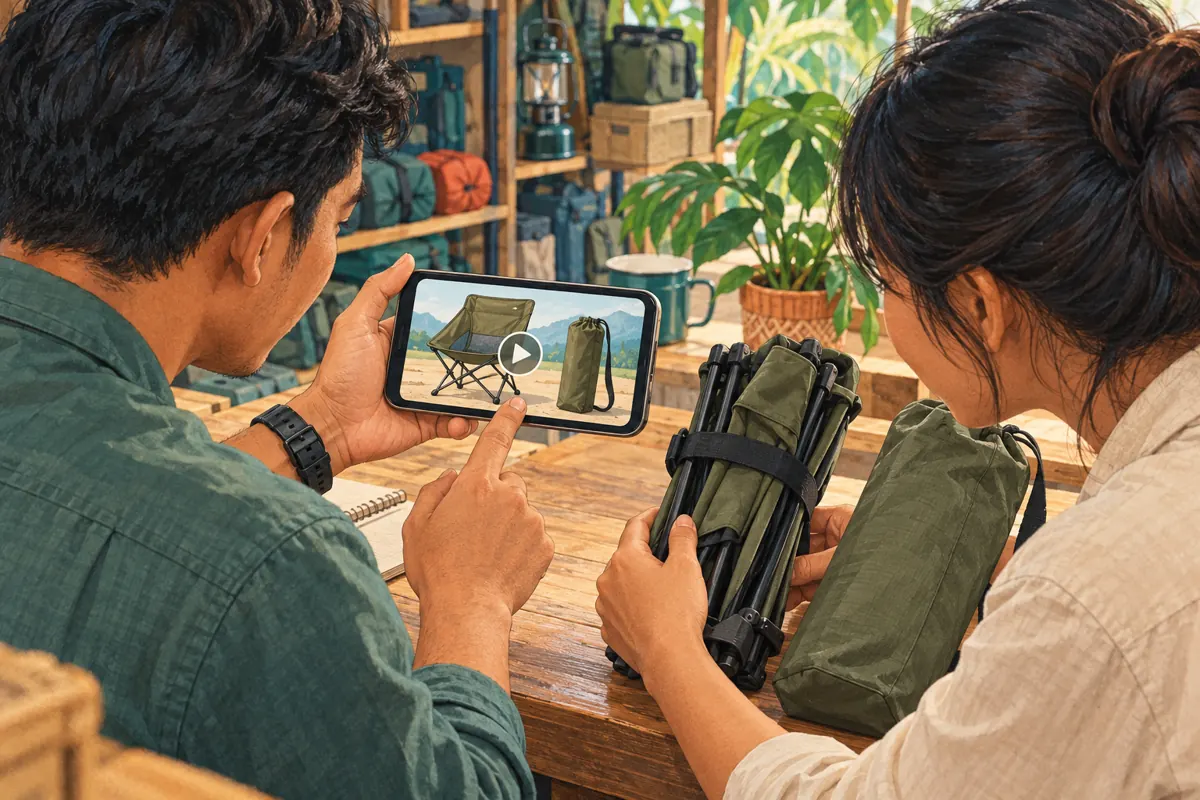
Introduce the link with the reason you are sending it. For example: “This excerpt shows how the displayed chair folds. Tell us which model you are considering so we can confirm the matching bag.” This connects the footage to a real enquiry and leaves room to verify current product details.
Keep changing commercial information outside a reusable demonstration wherever practical. Stock, collection arrangements and delivery availability should be confirmed for the particular enquiry. A folding demonstration filmed earlier can remain useful without pretending that an old offer still applies.
For Cambodian customers arranging transport or collection, invite a specific follow-up about packed dimensions, current availability or the intended pickup location. Answer only what your team can verify. Do not infer that watching the Clip means someone has reserved an item. A clear confirmation process still matters when a video makes the product easier to understand.
7. Decide how to handle customer-created excerpts
YouTube says clipping is enabled by default. To disable it, use YouTube Studio, Settings, Channel, Advanced Settings, then uncheck Allow viewers to clip my content and save. Review existing Clips through the video’s Clips area in Studio.
Make the decision around your actual material. A straightforward packing demonstration may lend itself to excerpts. A comparison that repeatedly moves between different models may be easier to misunderstand when separated from the surrounding explanation. Review representative videos before deciding how comfortable the business is with audience-created selections.
Give one staff member responsibility for checking excerpts brought to the shop’s attention. Assess the title, selected passage and likely interpretation together. A customer choosing a different moment is not automatically a problem. Focus on material omissions or inaccurate claims. When responding, explain the relevant product detail calmly and direct people to the complete explanation instead of turning an ordinary question into a dispute.
8. Apply a firm relevance test to SMM-panel services
The supplied smm-best.com catalogue includes “Youtube Shorts Likes | Max 50k | 5k-10k/Day | 𝐍𝐎 𝗥𝗘𝗙𝗜𝗟𝗟”. Its title identifies a Shorts-like offering; the supplied description is empty. It does not establish support for Clip links, a Cambodian audience, delivery quality or any business outcome. The title’s quantities and speed wording are not independently verified promises.
Do not choose this listing merely because both a Clip and a Short sound like short-form content. First ask what the task requires. Making a folding explanation easier to share requires accurate footage and a working link. A like service does not perform that editorial work, and the brief supplies no dedicated Clips service.
YouTube prohibits artificial inflation of engagement and warns that a hired promoter’s actions can affect the channel. Decline methods that violate that policy. Purchased engagement is not evidence of genuine interest, Cambodian users, sales or ad delivery. For this workflow, spending effort on a clearer demonstration and relevant distribution is the sensible decision.
9. Maintain the excerpt when the source changes
YouTube states that Clips become unavailable when the source video is deleted or made private. Keep this dependency in mind before reorganizing older demonstrations.
Maintain a compact register containing the source link, Clip link, product reference, question answered and places where your team has shared it. This is particularly helpful when several employees answer enquiries. It prevents an older excerpt from becoming an unexplained item in a saved-reply folder.
When a supplier changes a mechanism or replaces a model, compare the actual product with the footage. Decide whether the old explanation still applies. If it does not, prepare a replacement and update the reply material your team controls. For active enquiries, explain the difference directly. Do not rely on a new post somewhere else to correct an older link a customer is already using.
10. Review usefulness and avoid the common shortcuts
Review the questions that follow sharing. Do shoppers now understand how the chair packs, or do they still ask where the folding joint is? A repeated question can reveal that the camera angle is weak or the excerpt begins too late. Record these as observations, without claiming that the Clip caused a sale or solved every customer’s uncertainty.
Common mistakes include cutting away a qualification, using a title broader than the evidence, sharing the wrong model, treating the bag as an included accessory without checking and assuming a short excerpt can replace a full comparison. Another mistake is presenting a staged demonstration as a customer endorsement. Describe shop-made footage plainly.
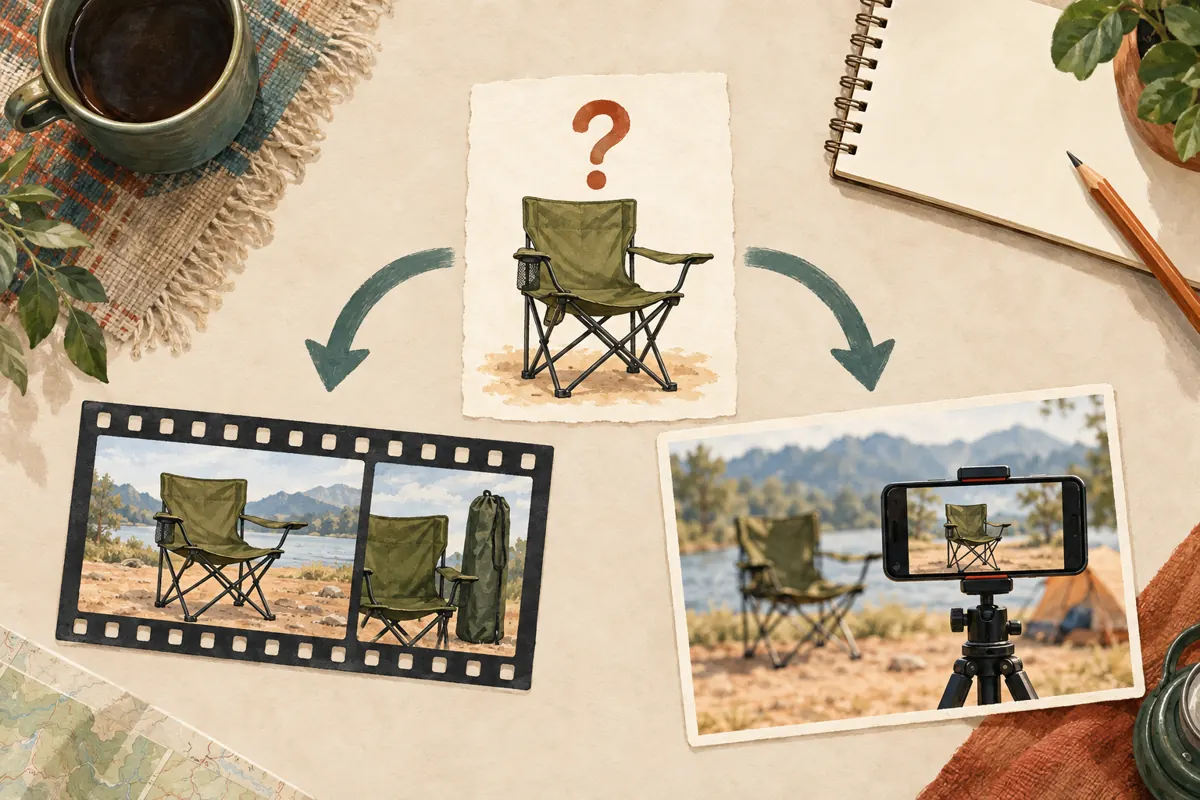
Use a simple decision rule: share the Clip when it answers the question accurately; share the full video when surrounding explanation matters; film a new answer when the necessary evidence is missing. That gives the team a repeatable workflow without requiring a new promotional purchase for every enquiry.
Frequently asked questions
Should we choose the shortest possible excerpt?
Choose the shortest passage that preserves the complete answer. A rapid glimpse of a folded chair may show its appearance but not explain the folding process. Include enough footage to establish the starting position, movement and result. If that still leaves an important qualification outside the selection, use the full explanation or record a more focused demonstration.
Can we use a Clip to confirm that a chair fits in a customer’s vehicle?
A visual demonstration can help explain the packed shape, but it cannot confirm fit in an unseen vehicle. Provide verified packed dimensions and ask the customer to compare them with the available space. Avoid relying on perspective, a staff member’s hand or a nearby object as a substitute for measurements.
Does our shop need an SMM service before sharing the Clip?
This task has no demonstrated need for one. The useful work is selecting an accurate answer, testing access and sending it where the question is relevant. The supplied catalogue does not document a Clips-specific offering. A service label containing YouTube does not establish that it accepts your intended link or advances your customer-service objective.
What if customers keep asking the same question after watching?
Ask which part remains unclear before producing more promotional material. They may understand the folding action but need to know whether the chair suits their storage space. Separate missing product information from an unclear demonstration. Add a measurement, a closer view or a direct reply according to the actual gap.
Explore the current service catalogue, create an account, or ask a specific question through support tickets.
Prepared with AI assistance. Illustrations explain the workflow and do not represent customer results.